

Augmented Reality Patient Education – Complete Guide
Managing respiratory conditions in UAE? Augmented reality for patient education offers revolutionary medical benefits. This technology overlays digital information onto the real world. Consequently, it creates immersive learning experiences for patients. The UAE healthcare sector rapidly adopts these innovations. Therefore, patients receive more effective and engaging education.
Augmented reality transforms complex medical information. For instance, it turns abstract concepts into interactive 3D models. Patients can visualize their anatomy and treatment processes. This leads to better understanding and adherence to therapy. Moreover, it reduces anxiety about medical procedures.
At Oxydubai, trusted by 10,000+ UAE patients with premium respiratory equipment and products. We integrate cutting-edge educational tools. Our goal is to enhance patient outcomes through technology. The future of healthcare education is here.
Need Respiratory Solutions?
Understanding Augmented Reality Patient Education
Augmented reality for patient education merges digital content with physical reality. Healthcare providers use AR apps on smartphones or tablets. These apps display interactive 3D models over real-world environments. Patients see their own anatomy and treatment devices. This creates powerful visual learning experiences.
Medical professionals leverage this technology extensively. For example, they demonstrate how a ResMed AirSense 11 CPAP machine works. Patients see internal components and airflow patterns. Consequently, they understand their therapy better. The World Health Organization respiratory health guidelines emphasize patient education importance.
This approach benefits various learning styles. Visual learners particularly gain from 3D models. Kinesthetic learners interact with virtual objects. Auditory learners hear explanations simultaneously. Therefore, augmented reality for patient education addresses diverse needs effectively.
Benefits of AR Medical Learning
AR medical learning offers numerous advantages for healthcare. First, it significantly improves knowledge retention. Patients remember 80% more information with interactive 3D models. This compares to only 20% with traditional methods. Therefore, educational outcomes improve dramatically.
Second, this technology reduces procedure anxiety. Patients visualize what will happen during treatment. For instance, they see how a Inogen One G5 portable oxygen concentrator functions. Understanding the process reduces fear and uncertainty. The UAE Ministry of Health medical standards support anxiety reduction methods.
Third, AR enables personalized learning experiences. Healthcare providers customize content for individual patients. They adjust complexity based on patient understanding. This personalized approach enhances engagement and comprehension.
Augmented Reality Patient Education Features
Modern augmented reality for patient education includes several key features. Interactive 3D modeling allows manipulation of virtual objects. Patients can rotate, zoom, and dissect anatomical models. This hands-on approach deepens understanding of complex concepts.
Step-by-step equipment tutorials provide practical guidance. For example, patients learn proper usage of a ResMed AirMini compact CPAP. They see correct mask placement and maintenance procedures. The Dubai Health Authority healthcare guidelines recommend thorough equipment training.
Multi-language support ensures accessibility for diverse populations. Real-time data integration shows treatment progress. Remote collaboration features enable specialist consultations. These features make augmented reality for patient education comprehensive and effective.
AR Technology Specifications
AR technology specifications vary across platforms. Most systems require smartphones or tablets with cameras. Advanced systems use specialized AR glasses. These devices track movement and overlay digital content accurately. Processing power determines rendering quality and speed.
Medical AR applications need high precision. They must display anatomical models with clinical accuracy. For critical devices like the ResMed Astral 150 ventilator, precision is essential. The Health Authority Abu Dhabi regulations ensure medical technology meets safety standards.
Connectivity requirements include stable internet for cloud processing. Storage capacity affects available educational content. Battery life determines usage duration. These specifications influence practical implementation in healthcare settings.
Expert Medical Advice?
Setup and Maintenance
Proper setup ensures optimal AR educational experiences. First, install approved medical AR applications. Then, calibrate devices for accurate tracking. Finally, test functionality with sample educational content. This process guarantees reliable performance.
Regular maintenance preserves system functionality. Update software to access latest features. Clean camera lenses for clear image recognition. Check battery health for uninterrupted sessions. Store devices in protective cases when not in use.
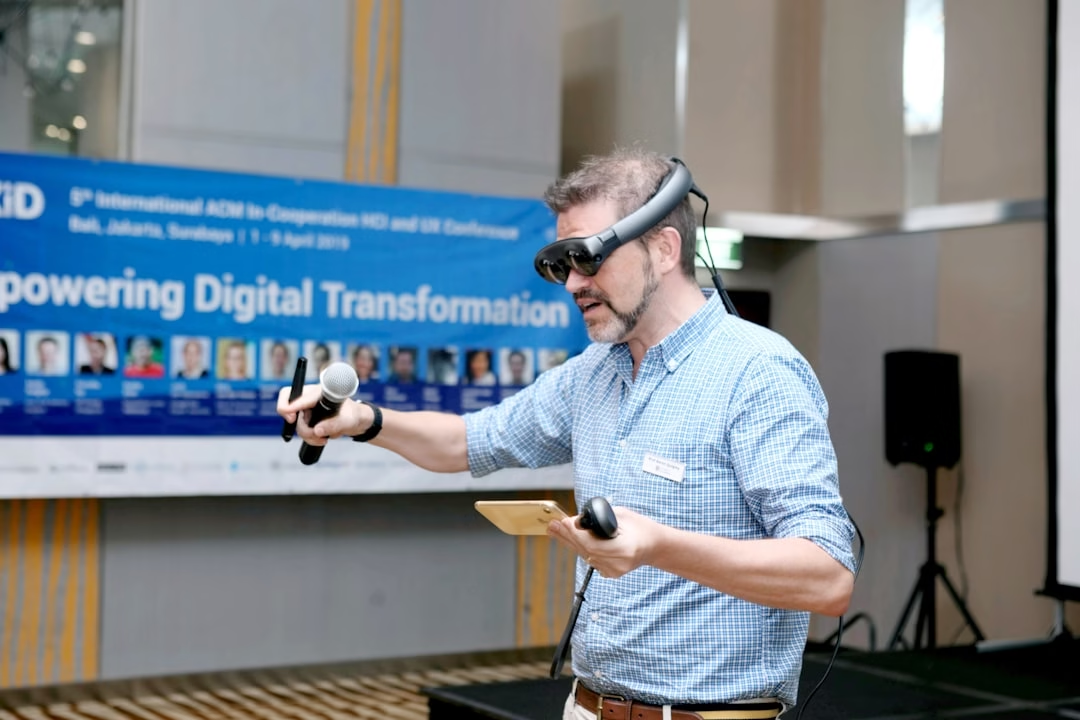
Healthcare staff need training for effective implementation. They learn to troubleshoot common technical issues. Additionally, they master content customization for different patients. This comprehensive approach maximizes educational benefits.
Augmented Reality Patient Education Advantages
The advantages of augmented reality for patient education are substantial. It dramatically improves treatment adherence. Patients who understand their therapy are more likely to follow it. For example, proper ResMed AirFit F30i mask usage becomes clear through AR demonstrations.
This technology reduces hospital readmission rates. Better educated patients manage their conditions more effectively. The UAE government healthcare regulations prioritize readmission reduction. Therefore, augmented reality for patient education supports national health goals.
Healthcare providers save time with efficient education. They convey complex information quickly through visual means. Patients require fewer clarification sessions. This efficiency benefits both medical staff and those receiving care.
Common Questions
Many patients ask about technology requirements. Most modern smartphones support basic AR functions. However, medical-grade applications might need specific devices. Healthcare providers guide patients through technical specifications.
Privacy concerns frequently arise. Reputable medical AR applications comply with data protection regulations. They encrypt patient information and secure transmission. The Dubai Health Authority healthcare guidelines ensure patient data security.
Cost considerations are important. Many healthcare institutions include AR education in standard care. Insurance coverage varies by provider and condition. Patients should consult their healthcare providers about availability.
Expert Recommendations
Medical experts recommend gradual implementation of AR education. Start with simple anatomical visualizations. Then progress to equipment tutorials. Finally, incorporate personalized treatment plans. This stepped approach ensures comfort and comprehension.
Combine AR with traditional education methods. Use AR for visual concepts and hands-on practice. Use printed materials for reference information. Use verbal explanations for personal connection. This multimodal approach addresses all learning preferences.
Regularly update educational content. Medical knowledge and technology evolve rapidly. Current information ensures patient safety and effectiveness. Healthcare providers should review content quarterly.
Frequently Asked Questions
What equipment works with augmented reality for patient education? Most modern respiratory devices have AR tutorials. This includes CPAP machines, oxygen concentrators, and ventilators.
Is special training needed to use medical AR? Healthcare providers receive training for implementation. Patients typically need minimal instruction for basic interaction.
Can elderly patients use AR technology effectively? Yes, interface designs consider various ability levels. Large icons and simple gestures enhance accessibility.
How accurate are anatomical models in AR? Medical AR uses clinically validated models. They represent human anatomy with high precision for educational purposes.
Does insurance cover AR patient education? Coverage varies by insurance provider and medical condition. Consult your insurance company for specific information.
Where can I experience medical augmented reality? Many healthcare providers now offer AR education. You can also contact our respiratory specialists for demonstrations.
Conclusion
Augmented reality for patient education represents healthcare’s future. This technology transforms complex medical information into understandable visual experiences. Patients gain deeper insight into their conditions and treatments. Consequently, they become active participants in their healthcare journey.
The benefits extend beyond individual patients. Healthcare systems experience reduced costs through better adherence. Medical professionals work more efficiently with visual tools. The entire healthcare ecosystem improves through enhanced education.
As technology advances, augmented reality for patient education will become more sophisticated. It will integrate with other digital health technologies. Ultimately, it will become standard in patient education worldwide. The journey toward better healthcare understanding continues.