

Ventilator Monitoring Parameters – Complete Guide
Introduction
Managing respiratory conditions in UAE? Understanding ventilator monitoring parameters is crucial for effective care. These parameters provide vital data on a patient’s respiratory status and the ventilator’s performance. Consequently, they enable clinicians to make precise adjustments for optimal support. In the UAE’s advanced healthcare landscape, proper monitoring ensures compliance with stringent UAE Ministry of Health medical standards. This guide explains these critical metrics. At Oxydubai, trusted by 10,000+ UAE patients, we provide premium respiratory equipment and products alongside expert guidance on their use.
Ventilators are life-saving devices. However, their efficacy depends entirely on correct interpretation of their data. Monitoring parameters act as a clinical dashboard. They reveal trends, signal alarms, and guide therapy. For instance, parameters help manage conditions like COPD or respiratory failure. Therefore, knowledge empowers both clinicians and caregivers. In home care settings, this understanding is equally vital. It ensures patient safety and treatment success. Ultimately, mastering these parameters leads to better patient outcomes across hospitals and homes in Dubai and the wider UAE.
Need Respiratory Solutions?
Understanding Ventilator Monitoring Parameters
Ventilator monitoring parameters are the measurable values displayed by the ventilator. They reflect both patient physiology and machine function. Key parameters include tidal volume, respiratory rate, and airway pressure. Additionally, minute ventilation and oxygen concentration are monitored. These metrics are essential for assessing ventilation adequacy. For example, the BMC Resmart G2S A20 Auto CPAP machine provides detailed data screens for such parameters. Understanding them prevents both over-ventilation and under-ventilation.
Alarms are integral to these parameters. They alert caregivers to potentially dangerous changes. Common alarms signal high pressure or low volume. Therefore, proper alarm setting is a critical skill. It requires knowledge of normal parameter ranges for the individual patient. Furthermore, trends in data are more valuable than single readings. They show the patient’s progress over time. This aligns with World Health Organization respiratory health guidelines on continuous assessment. In summary, these parameters form the language of mechanical ventilation.
Benefits of Advanced Ventilator Data
Advanced monitoring offers significant clinical benefits. Firstly, it enables personalized therapy. Clinicians can tailor settings to the patient’s exact needs. Secondly, it enhances patient safety through proactive alarm systems. For instance, a sudden drop in expired tidal volume may indicate a disconnection. Thirdly, it facilitates weaning protocols. Parameters like spontaneous breathing rate guide the readiness to reduce support. Devices like the Philips DreamStation Auto BiPAP machine excel in providing this detailed feedback for sleep therapy.
Moreover, data logging supports long-term care management. Doctors can review historical data during follow-ups. This is crucial for chronic condition management in the UAE. Additionally, clear data improves communication between healthcare teams. It provides objective measures for discussion. Consequently, it reduces clinical errors. Finally, for home users, understanding this data reduces anxiety. It transforms the ventilator from a mysterious machine to a manageable tool. This empowerment is a key benefit of modern, user-friendly devices available through specialists.
Ventilator Monitoring Parameters Features
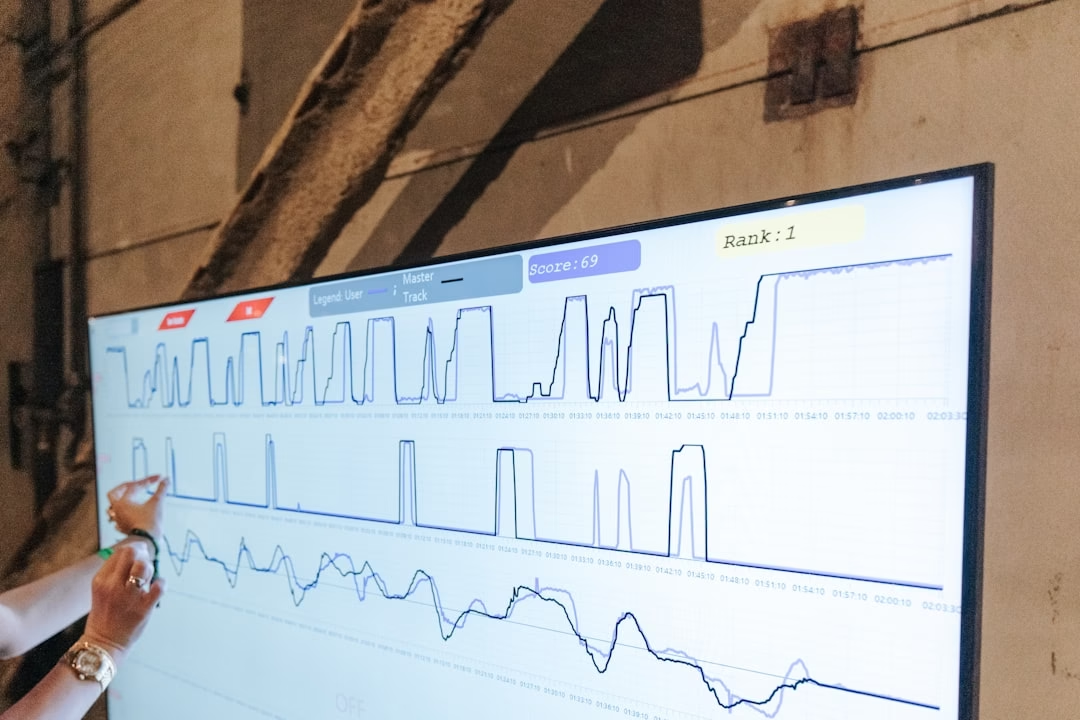
Modern ventilators boast sophisticated monitoring features. Typically, they include real-time graphical displays of pressure and flow waveforms. These visuals help identify issues like patient effort or air trapping. Furthermore, integrated capnography is a premium feature. It measures end-tidal CO2, a direct indicator of ventilation efficacy. Additionally, pulse oximetry integration is common. It correlates ventilator data with blood oxygen saturation. For example, the Philips DreamStation BiPAP ST machine offers comprehensive monitoring suites for complex needs.
Another key feature is the leak compensation algorithm. It distinguishes between normal circuit leak and a true problem. Moreover, data export capabilities are vital. They allow information to be shared electronically with physicians. Remote monitoring features are also emerging. They let specialists check data from afar, aligning with Dubai Health Authority healthcare guidelines on telehealth. In essence, these features turn raw data into actionable clinical intelligence. This supports the high standards of care expected in the UAE healthcare system.
Critical Ventilator Data Specifications
When selecting equipment, review monitoring specifications carefully. Accuracy is paramount; pressure measurements should be within ±2 cmH2O. The sampling rate for waveforms must be high for detail. Display resolution matters for clarity. Also, check the range of measurable parameters. A basic device may only show rate and pressure. Conversely, advanced units like the BMC BPAP G2S B25VT/B30VT ventilator monitor I:E ratio, tidal volume, and minute ventilation precisely.
Alarm customization specs are equally important. The device should allow setting high and low limits for each key parameter. Battery-backed alarm operation is essential for power failures. Furthermore, consider data storage capacity. It should log several months of nightly data for sleep apnea patients. Compliance reporting features are another specification. They verify device usage, which is often required for insurance in the UAE. Always ensure devices meet Health Authority Abu Dhabi regulations for safety and efficacy.
Expert Medical Advice?
Setup and Maintenance for Accurate Monitoring
Correct setup ensures monitoring accuracy. First, calibrate sensors as per the manufacturer’s manual. Second, ensure all connections are secure to prevent false leak readings. Third, position the flow sensor correctly in the circuit. For home devices, proper mask fitting is critical. A poor fit causes large leaks, skewing all data. Using a well-fitted mask like the ResMed AirFit F30i full face mask is fundamental for reliable readings.
Routine maintenance is non-negotiable. Regularly clean or replace air filters to prevent obstruction. Additionally, check tubing for cracks or kinks that affect pressure readings. Calibrate oxygen sensors if the device has them. Furthermore, update the device software when available. Updates often improve monitoring algorithms. Keep a log of all maintenance activities. This is part of good practice and may be needed for compliance with UAE government healthcare regulations. Ultimately, a well-maintained device delivers trustworthy data for clinical decisions.
Ventilator Monitoring Parameters Advantages
The advantages of mastering these parameters are extensive. Primarily, they enable early detection of clinical deterioration. For example, rising airway pressure may indicate worsening lung compliance. Secondly, they optimize comfort by fine-tuning settings to the patient’s effort. This is a key advantage of auto-titrating devices like the Philips Respironics DreamStation Auto CPAP. Thirdly, they provide objective evidence of treatment efficacy, which is reassuring for patients and doctors.
Another advantage is efficient resource use. Accurate monitoring can shorten ventilator dependency by guiding timely weaning. In the home setting, it promotes independence. Patients and families can manage care with confidence. Moreover, it supports value-based healthcare by demonstrating treatment outcomes. This is increasingly important in modern systems. In conclusion, the strategic use of ventilator monitoring parameters improves safety, outcomes, and patient empowerment across the UAE’s diverse care environments.
Common Questions on Ventilator Data
Users often have questions about ventilator monitoring. A frequent query is about high pressure alarms. Commonly, these are caused by coughing, secretions, or a kinked tube. Another common question concerns low minute ventilation readings. Often, this results from significant mask leak or reduced patient effort. People also ask about the difference between set and measured tidal volume. Discrepancies usually point to leaks or asynchrony between patient and machine.
Many wonder how often they should review the data. For chronic home users, a weekly check of summary data is wise. However, after any setting change, review is needed sooner. Others ask about the importance of the FIO2 (oxygen concentration) parameter. It is critical for patients requiring supplemental oxygen, such as those using an Inogen One G5 portable oxygen concentrator alongside ventilation. For persistent issues, always contact our respiratory specialists for interpretation and advice.
Expert Recommendations for UAE Patients
Experts emphasize a proactive approach to ventilator monitoring. First, receive comprehensive training from your supplier. Understand every parameter and alarm on your specific device. Second, establish a routine for data review. Don’t just silence alarms; understand their cause. Third, use the data for informed discussions with your pulmonologist. Bring printed reports or digital files to appointments. This collaborative approach is encouraged by UAE healthcare authorities.
Choose equipment with monitoring capabilities matched to your clinical needs. For simple sleep apnea, basic data may suffice. For complex respiratory failure, advanced monitoring is essential. Ensure your device is approved for use in the UAE. Finally, build a relationship with a reliable supplier. They provide ongoing support, maintenance, and education. As your condition evolves, so will your monitoring needs. Therefore, having expert partners like Oxydubai ensures you navigate these changes successfully with the right respiratory equipment and products.
FAQ: Ventilator Monitoring Parameters
Q1: What is the most critical ventilator monitoring parameter?
A: No single parameter is most critical; however, tidal volume and oxygen saturation (SpO2) are fundamentally important for ensuring adequate gas exchange.
Q2: How often should ventilator alarms be checked?
A: Alarm settings should be verified by a clinician at least daily for hospitalized patients and during every clinical review for home care patients.
Q3: Can I adjust ventilator settings based on the monitoring parameters myself?
A> No, setting adjustments must only be made by or under the direct guidance of a qualified healthcare professional to avoid serious harm.
Q4: What does a high PEEP alarm indicate?
A: A high PEEP (Positive End-Expiratory Pressure) alarm often signals increased pressure in the lungs, possibly from the patient coughing, biting the tube, or worsening lung stiffness.
Q5: Why is understanding ventilator monitoring parameters important for home care?
A: It enables early problem identification, ensures therapy effectiveness, and empowers caregivers, leading to safer and more successful home-based respiratory management.
Q6: Where can I get my ventilator data interpreted in Dubai?
A: You can contact our respiratory specialists at Oxydubai for expert data interpretation and equipment support across the UAE.
Conclusion
In summary, ventilator monitoring parameters are the cornerstone of safe and effective mechanical ventilation. They provide the essential data needed to guide life-supporting therapy. From basic metrics to advanced waveforms, each element offers insight into patient-ventilator interaction. Mastering this information leads to better clinical outcomes, whether in an ICU or a home bedroom. For individuals and healthcare providers in the UAE, leveraging this knowledge ensures care meets the high standards set by local authorities.
Choosing the right equipment with capable monitoring is a crucial step. Equally important is partnering with a knowledgeable supplier for training and support. At Oxydubai, we are committed to providing not only premium devices but also the education needed to use them confidently. We hope this guide demystifies ventilator monitoring parameters. For personalized advice on selecting and using monitored respiratory equipment, our team is always ready to assist you in achieving optimal respiratory health.