

Selecting Ventilator Long-Term Care – Complete Guide
Introduction
Managing respiratory conditions in UAE? Selecting a ventilator for long-term care is a critical decision. Consequently, it directly impacts patient safety, comfort, and clinical outcomes. In the UAE’s diverse healthcare landscape, facilities must balance advanced technology with regulatory compliance. Therefore, understanding the specific needs of long-term residents is paramount.
Modern ventilators offer life-sustaining support for chronic conditions. These devices manage everything from sleep apnea to respiratory failure. Moreover, the right choice enhances quality of life and reduces hospital readmissions. For instance, proper ventilation support can significantly improve stability for residents with COPD or neuromuscular diseases.
The UAE’s healthcare framework, guided by the UAE Ministry of Health medical standards, demands high-quality care. Facilities must adhere to strict guidelines for medical equipment. Simultaneously, they need reliable, user-friendly devices for staff. This guide provides a structured approach to this complex selection process.
At Oxydubai, trusted by 10,000+ UAE patients, we provide premium respiratory equipment and products. Our expertise supports facilities in making informed, compliant choices. Ultimately, the goal is ensuring resident well-being through superior respiratory care technology.
Need Respiratory Solutions?
Understanding Selecting Ventilator Long-Term Care
Selecting a ventilator for long-term care requires a multi-faceted assessment. First, consider the primary patient population. For example, facilities often care for individuals with progressive neurological disorders or end-stage respiratory disease. Therefore, devices must accommodate evolving needs over months or years.
Key clinical considerations include ventilation modes. Facilities often need both invasive and non-invasive options. Additionally, devices should offer volume control, pressure support, and SIMV modes. Consequently, clinicians can tailor therapy to each resident’s changing condition. This flexibility is crucial for long-term management.
Operational factors are equally important. Staff training levels vary across facilities. Thus, intuitive interfaces and clear alarms are essential. Devices like the BMC Resmart G2S A20 Auto CPAP machine offer user-friendly operation. Similarly, robust data reporting helps track patient progress and compliance effectively.
Finally, integration with other care aspects matters. Ventilators should work seamlessly with mobility aids, monitoring systems, and emergency protocols. Adherence to Dubai Health Authority healthcare guidelines ensures all selected equipment meets local safety and performance standards for long-term settings.
Benefits of Advanced Respiratory Support
Implementing the right ventilator system offers profound benefits. Primarily, it stabilizes residents with chronic respiratory insufficiency. This stability prevents acute exacerbations and hospital transfers. Moreover, consistent therapy improves sleep quality and daytime alertness for residents.
Enhanced quality of life is a significant advantage. Proper support allows residents to engage in activities and social interactions. Furthermore, advanced devices reduce the work of breathing. This conservation of energy is vital for those with limited respiratory muscle strength.
For facility management, reliable systems streamline care. Integrated humidification and oxygen blending improve comfort. Additionally, modern ventilators feature sophisticated alarm systems. These alerts enable prompt staff intervention, potentially preventing critical events.
Economic benefits also exist. Although initial investment is required, preventing hospitalizations reduces overall healthcare costs. Devices designed for durability, like the Philips DreamStation Auto BiPAP machine, offer long-term value. Ultimately, investing in quality respiratory support is both clinically and financially sound.
Selecting Ventilator Long-Term Care Features
Critical features define an ideal long-term care ventilator. First, dual-circuit capability is often necessary. This allows separate inhalation and exhalation pathways. Therefore, it minimizes the risk of cross-contamination and supports infection control protocols.
Advanced monitoring and data logging are indispensable. Facilities need to track trends in tidal volume, respiratory rate, and leak. Consequently, clinicians can make proactive therapy adjustments. Devices should store extensive data for review during physician rounds or audits.
Battery backup and portability are key for resident mobility and safety. A reliable internal battery ensures therapy continues during power transitions or transfers. For example, pairing a ventilator with a portable concentrator like the Inogen One G5 maximizes resident independence.
Finally, consider connectivity and integration. Modern ventilators often offer Bluetooth or Wi-Fi for remote monitoring. This aligns with telehealth initiatives and allows off-site clinicians to review data. Compatibility with local Health Authority Abu Dhabi regulations for data security and medical device reporting is a mandatory feature for UAE facilities.
Medical Ventilator Specifications
Technical specifications form the backbone of your selection. Pressure and flow capabilities must match clinical demands. Typically, long-term care devices require a pressure range of 4-30 cm H2O for non-invasive support. However, some residents may need higher pressures for restrictive lung diseases.
Oxygen blending precision is vital. The device should accurately deliver prescribed FiO2 levels from 21% to 100%. Moreover, integrated oxygen concentrators or blenders must be reliable. Consistent oxygen delivery prevents hypoxic episodes in vulnerable residents.
Humidification is non-negotiable for comfort and airway health. Look for integrated heated humidifiers with automatic climate control. This feature prevents mucosal drying and improves tolerance. For instance, the Philips Respironics DreamStation Auto CPAP includes advanced humidification.
Alarm systems require careful evaluation. Audible and visual alarms for low battery, circuit disconnect, and high pressure are standard. Furthermore, alarms should be distinct and prioritized according to World Health Organization respiratory health guidelines on patient safety. This ensures staff respond appropriately to the most urgent alerts first.
Expert Medical Advice?
Setup & Maintenance
Proper setup ensures ventilator efficacy and safety. Initially, conduct a clinical assessment for each resident. Then, configure settings like mode, rate, and triggers based on prescription. Always perform a circuit check and leak test before starting therapy.
Routine maintenance is a regulatory requirement. Daily tasks include inspecting circuits, filters, and masks for damage. Weekly, clean or replace filters and disinfect external surfaces. Moreover, calibrate sensors according to the manufacturer’s schedule to ensure accuracy.
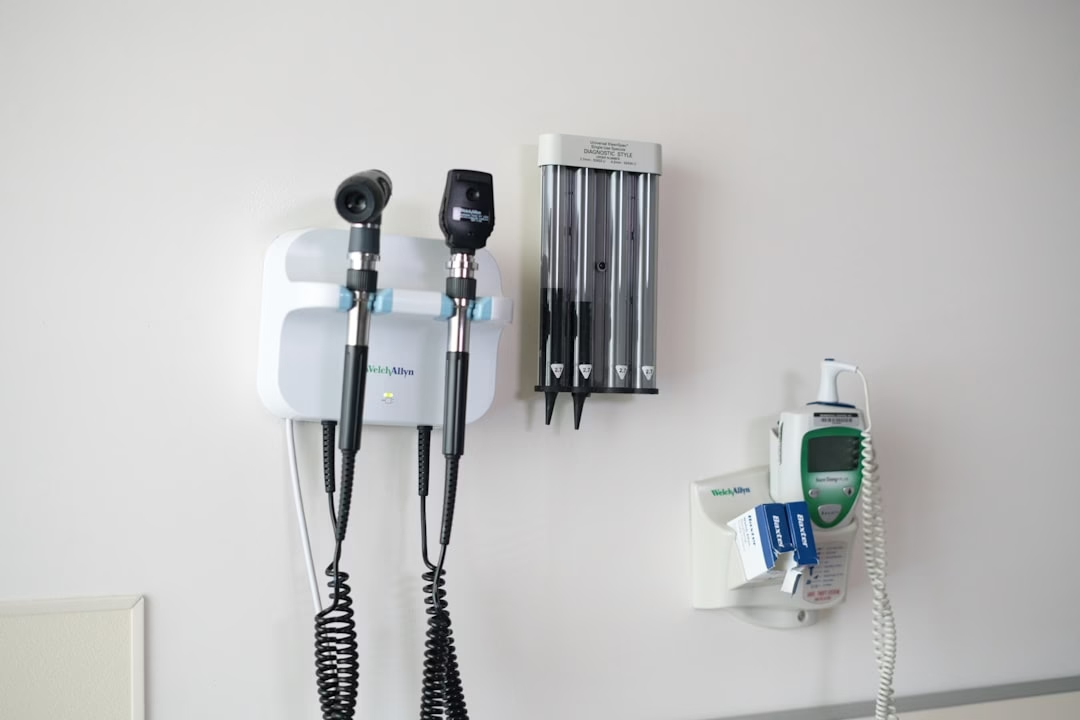
Staff training is a continuous process. Ensure all users understand basic troubleshooting. For example, they should know how to respond to common alarms or power failures. Utilizing devices with consistent interfaces, like the Philips DreamStation BiPAP ST machine, simplifies training.
Documentation is critical for compliance. Maintain logs for daily use, maintenance actions, and any incidents. This documentation must align with UAE government healthcare regulations for medical device management. Consequently, facilities can demonstrate due diligence during inspections.
Selecting Ventilator Long-Term Care Advantages
The strategic advantage of selecting a ventilator for long-term care is improved clinical governance. Facilities gain control over a vital therapy. This control leads to standardized, high-quality respiratory care across all residents. Furthermore, it reduces dependency on external providers for routine management.
Operational resilience is a major advantage. Having the right equipment on-site ensures continuity of care. Additionally, it allows for rapid response to a resident’s deteriorating condition. Devices capable of both CPAP and BiPAP, like the BMC BPAP G2S B25VT/B30VT ventilator, provide versatile support.
Enhanced reputation is a key benefit. Facilities known for excellent respiratory care attract more referrals. They also build trust with residents’ families. Providing advanced support with comfortable interfaces, such as the ResMed AirFit F30i full face mask, demonstrates a commitment to dignity and comfort.
Finally, there is a future-proofing advantage. Selecting scalable, upgradable systems allows facilities to adapt to new technologies and treatments. This proactive approach ensures long-term viability and compliance with evolving UAE Ministry of Health medical standards. Thus, the facility remains at the forefront of long-term respiratory care.
Common Questions
What is the typical lifespan of a long-term care ventilator? With proper maintenance, high-quality ventilators last 5-7 years. However, technological advancements may prompt earlier upgrades.
How many staff members need training? All clinical staff interacting with residents on ventilation require basic training. Furthermore, designate several key staff for advanced troubleshooting and maintenance.
Can one ventilator model suit all residents? Often, a facility standardizes on one or two primary models. However, you may need specialized devices for unique cases, like high-pressure requirements or pediatric residents.
What are the warranty and service considerations? Prioritize suppliers offering comprehensive local service and support. Ensure warranty terms cover critical components and include prompt repair services to minimize downtime.
Expert Recommendations
Begin with a thorough needs assessment. Engage clinicians, nurses, and biomedical engineers in the process. Subsequently, create a detailed specification list based on your resident population and staff capabilities.
Prioritize vendors with a strong UAE presence. Local support is crucial for training, maintenance, and emergency repairs. Additionally, choose equipment that is readily available and has proven reliability in the regional climate.
Consider a phased implementation. Start with a pilot program for a small group of residents. Then, gather feedback and refine protocols before facility-wide rollout. This approach minimizes disruption and identifies potential issues early.
Finally, establish a continuous quality improvement cycle. Regularly review clinical outcomes, staff feedback, and device performance data. For personalized guidance, contact our respiratory specialists. We can help you navigate the entire process of selecting a ventilator for long-term care, ensuring the best match for your facility’s unique needs and goals.
Frequently Asked Questions (FAQ)
What is the most important factor when selecting a ventilator for long-term care? Matching the device’s capabilities to the specific clinical needs of your resident population is paramount. Consider diagnoses, required ventilation modes, and staff skill level.
How do UAE regulations impact ventilator selection? All devices must be approved by the MOH, DHA, or HAAD. Furthermore, facilities must comply with guidelines for maintenance, staff training, and infection control related to respiratory equipment.
Are portable ventilators suitable for long-term care? Yes, for mobile residents within the facility. However, they often have fewer features than stationary units. A mix of both may be ideal.
What backup systems are necessary? Each ventilator should have an internal battery. Additionally, facility-wide backup power (UPS/generator) is mandatory to ensure therapy continues during power outages.
How often should ventilator settings be reviewed? A formal clinical review should occur at least quarterly, or whenever a resident’s condition changes. Nurses should perform basic checks daily.
Can we use CPAP machines for long-term ventilation? CPAP is for sleep apnea and provides constant pressure only. True ventilators for long-term care offer variable pressure support and backup rates for residents with respiratory failure. Explore options like our respiratory equipment and products for the right device.
Conclusion
Selecting a ventilator for long-term care is a significant, multifaceted decision. It requires balancing clinical requirements, operational practicality, and strict regulatory compliance. By following a structured process, facilities can make choices that enhance resident care and facility efficiency.
The benefits of a well-considered selection are substantial. They include improved patient outcomes, increased staff confidence, and operational resilience. Moreover, investing in the right technology future-proofs your facility against evolving standards and patient needs.
Remember, the goal is sustainable, high-quality respiratory care. This involves choosing reliable equipment, ensuring comprehensive staff training, and implementing robust maintenance protocols. Partnering with an experienced supplier provides invaluable support throughout this journey.
For facilities across the UAE, the path to optimal respiratory care is clear. Prioritize patient needs, adhere to local guidelines, and select technology that empowers your staff. To begin evaluating specific models and solutions for your facility, contact our respiratory specialists today for a detailed consultation.