

Professional Bi-Level Ventilator – Complete Guide
Introduction
Managing respiratory conditions in UAE? A professional bi-level ventilator can be a transformative solution for complex breathing difficulties. This advanced medical device provides two distinct pressure levels, offering superior support compared to standard CPAP machines. Consequently, it is essential for patients whose conditions require more nuanced respiratory assistance.
In the UAE’s diverse climate, managing chronic respiratory illnesses demands reliable and advanced equipment. A professional bi-level ventilator ensures patients receive tailored therapy, improving oxygenation and reducing the work of breathing. Moreover, it supports better sleep and overall quality of life for those with severe impairments.
At Oxydubai, we understand these critical needs. Trusted by 10,000+ UAE patients, we provide premium respiratory equipment and products. Our range includes top-tier devices like the BMC Resmart G2S A20 Auto CPAP machine for simpler cases. However, for advanced care, a professional bi-level ventilator is often the definitive answer.
This guide explores the vital role of this technology. We will detail who benefits from it, its key features, and how to access it in the UAE. Adhering to UAE Ministry of Health medical standards, we ensure all information is medically accurate and relevant for residents seeking advanced care.
Need Respiratory Solutions?
Understanding Professional Bi-Level Ventilator
A professional bi-level ventilator is a non-invasive ventilation (NIV) device. It delivers two alternating pressure levels: a higher Inspiratory Positive Airway Pressure (IPAP) and a lower Expiratory Positive Airway Pressure (EPAP). This dual-pressure system actively assists inhalation and supports exhalation, making breathing significantly easier for the patient.
Unlike standard CPAP, which provides a single constant pressure, a bi-level machine is dynamic. Therefore, it is crucial for patients who struggle against a fixed pressure or have weakened respiratory muscles. The device can be set in various modes, like S (spontaneous), T (timed), or S/T (spontaneous/timed), to match individual patient triggers and needs.
Who needs this level of care? Primarily, individuals with conditions that cause chronic alveolar hypoventilation or acute respiratory failure. For instance, it is a cornerstone of treatment for neuromuscular diseases like ALS. Additionally, it manages severe COPD, obesity hypoventilation syndrome, and certain central sleep apneas.
Selecting the right device requires professional assessment. Options like the Philips DreamStation Auto BiPAP machine offer auto-adjusting comfort. For more advanced cases, the Philips DreamStation BiPAP ST machine provides guaranteed backup rates. Ultimately, a clinical evaluation determines the precise prescription.
Benefits of Advanced Bi-Level Therapy
Advanced bi-level therapy offers profound clinical benefits. First, it dramatically improves gas exchange by enhancing alveolar ventilation. This process reduces carbon dioxide retention (hypercapnia), a dangerous condition common in restrictive lung diseases. As a result, patients experience fewer morning headaches and feel more alert.
Second, it unloads the respiratory muscles. Patients with neuromuscular weakness expend enormous energy just to breathe. By providing pressure support during inspiration, the ventilator performs much of the work. Consequently, this reduces dyspnea (shortness of breath) and prevents respiratory muscle fatigue, which can lead to failure.
Third, it improves sleep architecture and quality. Severe respiratory conditions often fragment sleep. The synchronized support of a bi-level ventilator maintains open airways and supports regular breathing patterns throughout the night. Furthermore, better sleep contributes to improved daytime function and cardiovascular health.
Finally, it can prevent hospitalizations. Regular use at home manages chronic conditions proactively. This aligns with World Health Organization respiratory health guidelines on chronic disease management. For mobility, pairing therapy with a Inogen One G5 portable oxygen concentrator can offer comprehensive support. Thus, therapy enhances both health outcomes and independence.
Professional Bi-Level Ventilator Features
Modern professional bi-level ventilator units boast sophisticated features for safety and comfort. Key among them is advanced leak compensation. High leak levels can disrupt therapy, but smart algorithms automatically adjust flow to maintain prescribed pressures. This ensures effective treatment even with mask movement.
Another critical feature is the backup respiratory rate (Timed mode). For patients with central apneas or weak respiratory drive, the device will deliver a breath if the patient does not initiate one within a set time. This feature is vital in devices like the BMC BPAP G2S B25VT/B30VT ventilator, which is designed for complex cases.
Integrated data tracking and connectivity are also essential. Clinicians can remotely monitor usage, efficacy metrics (like AHI), and leak data. Therefore, they can fine-tune settings without requiring a clinic visit. Additionally, built-in heated humidifiers prevent airway dryness and improve compliance, especially in air-conditioned UAE environments.
Pressure relief technology, such as C-Flex or Bi-Flex, makes therapy more comfortable by easing the transition between IPAP and EPAP. Moreover, ramp features allow pressure to start low and gradually increase. These user-centric designs, compliant with Dubai Health Authority healthcare guidelines, encourage long-term adherence to this life-sustaining treatment.
Bi-Level Machine Specifications
When evaluating a bi-level machine, technical specifications determine its suitability. Pressure range is paramount. Typically, IPAP ranges from 4 to 30 cm H2O, and EPAP from 4 to 25 cm H2O. A wide range, like that found on the Philips DreamStation BiPAP ST, accommodates progressive diseases where needs may increase over time.
Rise time and inspiratory time are crucial adjustable parameters. Rise time controls how quickly the machine reaches the set IPAP after the patient triggers a breath. A shorter rise time benefits patients needing quick support. Conversely, inspiratory time limits the duration of the IPAP phase, preventing over-inflation in patients with obstructive patterns.
Oxygen integration is another key spec. Many patients on bi-level therapy also require supplemental oxygen. Machines feature an oxygen inlet port to blend O2 from a concentrator into the air stream. For example, this allows seamless use alongside an Inogen One G5 portable oxygen concentrator. Compliance with Health Authority Abu Dhabi regulations ensures all devices meet safety and performance benchmarks.
Finally, consider power specifications and battery backup. In the UAE, having a device that can operate on DC power or has a battery option is prudent. This provides continuity of therapy during travel or power interruptions. Always verify that the device’s electrical specs match UAE standards for safe home medical use.
Expert Medical Advice?
Setup and Maintenance
Proper setup of a professional bi-level ventilator is a clinical process. Initially, a sleep specialist or pulmonologist must prescribe the specific pressures and mode. Then, a trained technician or homecare provider configures the device. They will also help select an appropriate interface, such as the ResMed AirFit F30i full face mask, which is often used for higher pressures.
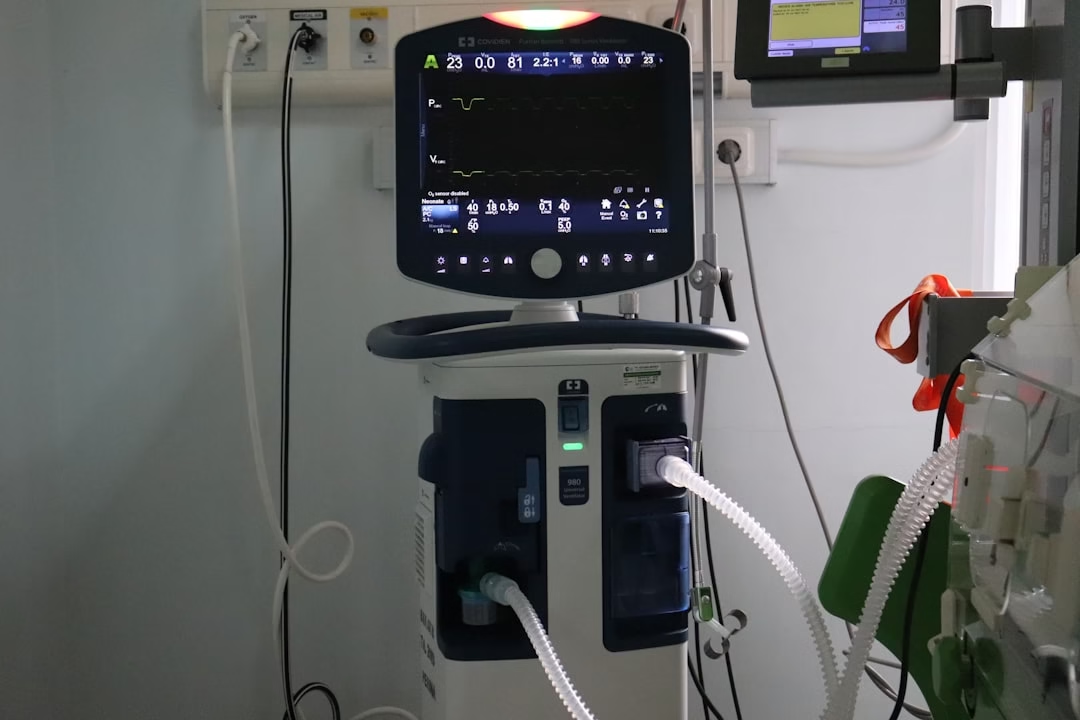
Daily maintenance is straightforward but essential. The user should wipe the mask cushion and frame with a mild, damp cloth daily. Weekly, they must disassemble and wash the mask, tubing, and water chamber with warm, soapy water. Importantly, they should use distilled water in the humidifier to prevent mineral buildup, which is common in many UAE regions.
Filter maintenance protects the device and the patient. Most machines have disposable and reusable filters. The disposable filter should be checked weekly and replaced monthly, or more often in dusty environments. The reusable filter requires washing weekly and must be completely dry before reinsertion. This prevents dust ingress and ensures clean air delivery.
Regular professional servicing is also critical. An annual check by the provider ensures the device delivers accurate pressures and that all components function safely. This service includes a factory calibration check. Following these steps, in line with UAE government healthcare regulations, guarantees the device’s longevity and the patient’s safety.
Professional Bi-Level Ventilator Advantages
The primary advantage of a professional bi-level ventilator is its life-sustaining capability. For patients with progressive neuromuscular diseases, it can delay the need for invasive tracheostomy ventilation for years. This preserves quality of life and allows patients to remain in their homes with their families.
Another significant advantage is symptom management and crisis prevention. By effectively treating nocturnal hypoventilation, it reduces the risk of acute-on-chronic respiratory failure, a common cause of emergency hospitalization. Therefore, it is a proactive tool in chronic disease management, reducing long-term healthcare costs.
Technological integration offers a further advantage. Modern devices sync with apps and cloud platforms. Patients and caregivers can track therapy progress, while clinicians access detailed data for remote management. This is particularly beneficial in the UAE’s widespread urban centers, facilitating specialist care without frequent travel.
Finally, these devices offer flexibility and customization. Unlike simpler Philips Respironics DreamStation Auto CPAP machines, bi-level ventilators can be finely tuned. Settings like trigger and cycle sensitivity can be adjusted to match the patient’s unique breathing pattern. This personalized approach, supported by experts you can contact our respiratory specialists for, ensures optimal therapeutic outcomes.
Common Questions Answered
Is a BiPAP the same as a professional bi-level ventilator? Often, the terms are used interchangeably. However, “BiPAP” is a brand name from one manufacturer. “Professional bi-level ventilator” is a broader term for capable, often more advanced, devices used for ventilatory support beyond simple sleep apnea.
Can I travel with this device? Yes, most modern units are designed for portability. Many are FAA-approved for in-flight use. You will need a compatible battery or DC power adapter. Always check with your airline and the device manufacturer for specific travel guidelines before your trip.
How noisy is the machine? Modern devices are very quiet, typically operating below 30 decibels. This noise level is softer than a whisper. However, the sound of air moving through the mask and tube may be noticeable initially. Most users adapt to this sound quickly.
What if I have a power outage? Planning is essential. You should have a backup power solution, such as a deep-cycle battery with an inverter or a manufacturer-approved external battery pack. Discuss backup options with your equipment provider when setting up the device to ensure safety.
Will insurance cover it? In the UAE, coverage depends on your specific health insurance plan and the medical necessity demonstrated by your doctor. Typically, a detailed sleep study or pulmonary function test report is required for authorization. Your equipment provider can often assist with the paperwork.
How do I clean the tubing? Use warm water and a mild detergent weekly. Hang it to air dry completely out of direct sunlight. Special tube brushes are available for thorough cleaning. Never use harsh chemicals, as residues can be inhaled and damage the tubing material.
Expert Recommendations for UAE Patients
For UAE residents considering a professional bi-level ventilator, expert guidance is non-negotiable. First, undergo a comprehensive evaluation at a certified sleep lab or pulmonary clinic. This assessment should include polysomnography and arterial blood gas analysis if hypercapnia is suspected. Accurate diagnosis is the foundation of effective treatment.
Second, choose a reputable supplier with clinical support. The provider should offer not just the device, but also comprehensive setup, patient education, and ongoing technical service. They must be knowledgeable about UAE Ministry of Health medical standards for medical devices. A supplier like Oxydubai, with a wide range of respiratory equipment and products, can match you with the right technology.
Third, prioritize comfort from day one. Mask fit is critical. Be prepared to try different styles (nasal, full face, nasal pillows) to find the most comfortable and effective seal. Using a heated humidifier is highly recommended in the UAE’s dry, air-conditioned environments to prevent nasal congestion and dryness.
Finally, commit to follow-up. Therapy needs may change as your condition evolves. Schedule regular reviews with your physician and share the device’s usage data. Adherence to therapy is the key to reaping its long-term benefits, such as improved survival rates in conditions like COPD and neuromuscular disease.
Frequently Asked Questions (FAQ)
Who typically needs a professional bi-level ventilator? Patients with moderate to severe COPD, neuromuscular diseases (ALS, muscular dystrophy), obesity hypoventilation syndrome, or complex sleep apnea often require this advanced support.
What’s the difference between CPAP and a bi-level ventilator? CPAP provides one constant pressure to keep airways open. A professional bi-level ventilator provides two pressures: a higher one for inhalation and a lower one for exhalation, offering active breathing assistance.
Is it difficult to get used to a bi-level ventilator? There is an adjustment period, as with any therapy. However, with proper mask fitting, comfort settings (like ramp), and support from your care team, most patients adapt successfully within a few weeks.
Can I use a bi-level ventilator for sleep apnea only? For standard obstructive sleep apnea, CPAP is usually first-line. However, a bi-level machine may be prescribed if you cannot tolerate high CPAP pressures or have central/mixed sleep apnea events.
How often should the filters be changed? Disposable filters should typically be replaced every month. In dustier environments, like during sandstorms in the UAE, check and replace them more frequently, perhaps every two weeks.
Where can I get a professional bi-level ventilator in Dubai? You can explore clinically-supported options through trusted providers like Oxydubai. For personalized advice, you can always contact our respiratory specialists for a consultation.
Conclusion
A professional bi-level ventilator is a critical medical device for individuals with significant respiratory insufficiency. It provides sophisticated, life-enhancing support that simpler machines cannot offer.