

Oxygen During Anesthesia Management – Complete Guide
Looking for sleep apnea solutions? Effective oxygen during anesthesia management is a cornerstone of patient safety in any surgical setting. Consequently, precise control of oxygen delivery prevents hypoxia and supports vital organ function during procedures. In the UAE’s advanced healthcare landscape, adherence to stringent protocols is paramount. Therefore, hospitals and clinics rely on sophisticated equipment and trained specialists. At Oxydubai, trusted by 10,000+ UAE patients, we provide premium respiratory equipment and products that meet these critical demands. Our solutions support the high standards set by local authorities, ensuring optimal patient outcomes.
Managing anesthesia requires a multi-faceted approach. First, anesthesiologists must monitor oxygen saturation continuously. Next, they adjust delivery systems based on real-time data. Furthermore, equipment like ventilators and concentrators must be reliable. In Dubai and Abu Dhabi, facilities follow guidelines from the Dubai Health Authority healthcare guidelines and the Health Authority Abu Dhabi regulations. Ultimately, the goal is to maintain physiological stability. This guide explores the key components of effective perioperative oxygen management.
Need Respiratory Solutions?
Understanding Oxygen During Anesthesia Management
Oxygen during anesthesia management refers to the protocols for delivering and monitoring oxygen to sedated patients. Primarily, it ensures adequate tissue oxygenation despite drug-induced respiratory depression. Typically, this involves a blend of medical gases delivered via an anesthesia machine. For instance, devices like the ResMed Astral 150 ventilator offer precise control in critical settings. Moreover, management extends to pre-oxygenation and post-operative care.
Key principles include titration and safety. Specifically, clinicians must avoid both hypoxia and hyperoxia. According to the World Health Organization respiratory health guidelines, oxygen is a vital medicine that requires careful handling. In the UAE, the UAE Ministry of Health medical standards provide a framework for its use. Therefore, successful management combines technology, training, and protocol. This foundation supports all surgical patient safety initiatives.
Benefits of Perioperative Oxygen Protocols
Implementing robust perioperative oxygen protocols offers significant advantages. Firstly, it drastically reduces the risk of hypoxic brain injury. Secondly, it supports cardiovascular stability during lengthy operations. Additionally, proper management can shorten recovery room time. For example, consistent oxygenation promotes better wound healing. Furthermore, it minimizes post-operative nausea and cognitive dysfunction.
From an institutional perspective, standardized protocols enhance efficiency. They reduce variability in care and improve team coordination. Also, they ensure compliance with national standards like those from the UAE government healthcare regulations. Ultimately, investing in quality respiratory equipment and products translates to better patient outcomes and institutional reputation. Therefore, the benefits are both clinical and operational.
Oxygen During Anesthesia Management Features
Modern oxygen during anesthesia management systems incorporate several critical features. Importantly, they offer integrated monitoring of SpO2, FiO2, and end-tidal carbon dioxide. Additionally, they have fail-safe mechanisms and backup oxygen supplies. For instance, portable solutions like the Inogen One G5 portable oxygen concentrator provide mobility for patient transfers. Moreover, advanced ventilators feature adaptive pressure support modes.
Another key feature is connectivity. Modern machines log data for electronic health records. This supports audit trails and quality improvement. Also, user interfaces are designed for crisis situations. They provide clear, immediate feedback to the anesthesiologist. Consequently, these features collectively create a safety net. They allow clinicians to focus on the patient, not the equipment. This technological integration is essential for modern anesthesia care.
Anesthesia Oxygen System Specifications
Selecting the right system requires understanding key specifications. Flow rate capability is paramount; systems must deliver from 0 to 15 L/min accurately. Furthermore, oxygen concentration must be adjustable from 21% to 100%. Pressure alarms are mandatory for circuit disconnection. Similarly, integrated gas analyzers are non-negotiable for patient safety. Devices must also comply with ISO 80601-2-55 medical electrical equipment standards.
In the UAE, specifications must align with regulatory approvals. For example, the ResMed AirSense 11 CPAP machine, while for sleep therapy, exemplifies the precision engineering required. However, for anesthesia, more robust systems like the Astral 150 are typical. Compatibility with hospital pipeline systems is another critical spec. Therefore, technical specifications ensure reliability and interoperability in the surgical suite.
Expert Medical Advice?
Setup and Maintenance for Safety
Correct setup and rigorous maintenance are non-negotiable. Initially, a pre-use checklist must verify gas supply, ventilator function, and alarm operation. Subsequently, circuits and masks must be connected securely. For instance, a secure seal with a mask like the ResMed AirFit F30i mask is crucial for non-invasive support. Daily testing of backup oxygen cylinders is also essential.
Maintenance follows a strict schedule. Firstly, filters and sensors require regular cleaning and calibration. Secondly, mechanical parts need inspection for wear. Furthermore, documentation of all service is mandatory for accreditation. This aligns with Dubai Health Authority healthcare guidelines. Ultimately, a proactive maintenance culture prevents equipment failure. It ensures every piece of technology performs flawlessly when a patient’s life depends on it.
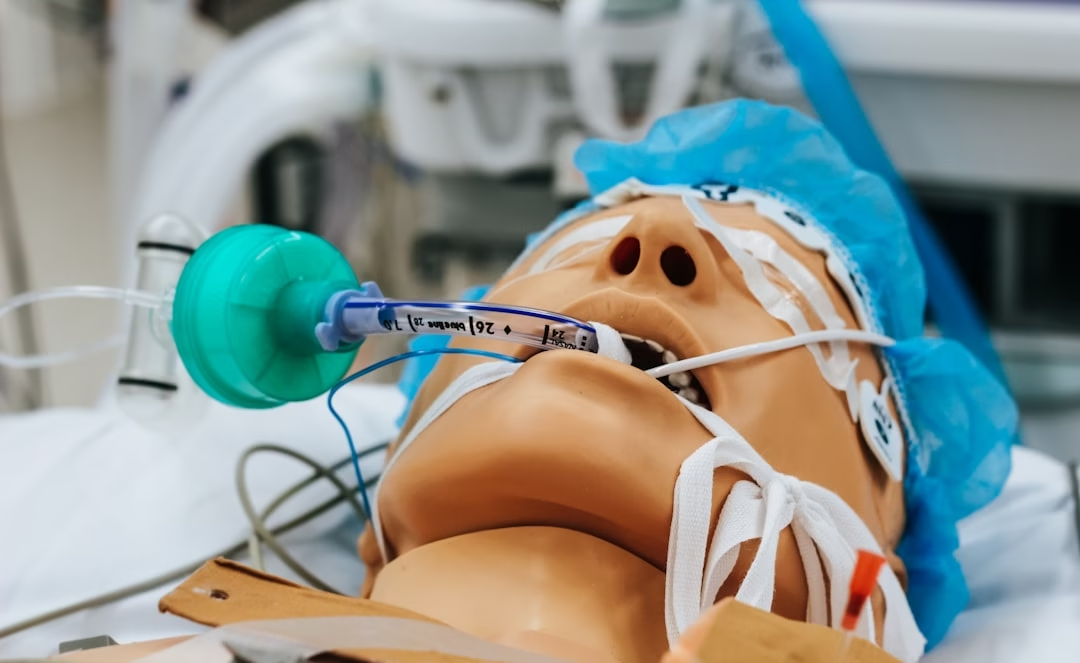
Oxygen During Anesthesia Management Advantages
The primary advantage of expert oxygen during anesthesia management is enhanced patient safety. It directly prevents anesthesia-related morbidity. Additionally, it provides the anesthesiologist with greater control and situational awareness. Moreover, efficient systems reduce waste of medical gases. This is both an economic and environmental benefit. Furthermore, standardized management improves team training and emergency response.
For healthcare facilities, robust management is a mark of quality. It satisfies key performance indicators and regulatory audits. Also, it reduces liability and insurance costs. Investing in reliable equipment, such as the ResMed AirMini compact CPAP for specific post-op scenarios, adds flexibility. Therefore, the advantages create a compelling case for prioritizing this aspect of perioperative care. It is a critical component of a world-class surgical service.
Common Questions on Anesthesia Oxygen
Professionals often have questions about best practices. A frequent query concerns the optimal FiO2 for general anesthesia. While it is patient-specific, it often starts high and is titrated down. Another question involves managing suspected intraoperative hypoxia. The response includes checking the circuit, increasing FiO2, and manual ventilation. Furthermore, many ask about the difference between anesthesia machines and ICU ventilators. The former integrates vaporizers for volatile agents.
Questions also arise about equipment sourcing. For example, where to find reliable backup devices. Reputable suppliers like Oxydubai provide certified equipment that meets all UAE Ministry of Health medical standards. Additionally, training on new systems is a common concern. Therefore, partnering with a provider that offers comprehensive support is crucial. This ensures clinical teams are confident and competent.
Expert Recommendations for UAE Clinics
Experts recommend a layered approach to oxygen during anesthesia management. First, conduct a risk assessment of your current setup. Second, ensure all equipment has valid service contracts and local regulatory approval. Third, implement simulation training for crisis scenarios like pipeline failure. Additionally, integrate portable concentrators for patient transport. The Inogen One G5 is ideal for this purpose.
Furthermore, establish a clear protocol aligned with Health Authority Abu Dhabi regulations. Also, designate a staff member responsible for equipment checks. Finally, build a relationship with a trusted medical supplier. For tailored advice, you can always contact our respiratory specialists. These steps will fortify your anesthesia practice against preventable oxygen-related incidents.
Frequently Asked Questions
Q: What is the primary goal of oxygen during anesthesia management?
A: The primary goal is to maintain adequate arterial oxygen saturation to prevent organ damage and support metabolism during the controlled stress of surgery.
Q: How often should anesthesia machine oxygen sensors be calibrated?
A: Follow the manufacturer’s schedule, typically every 6-12 months, or as mandated by your facility’s policy and DHA guidelines.
Q: Can CPAP machines be used in anesthesia?
A: While not for delivering volatile anesthetics, devices like the ResMed AirSense 11 may be used in certain post-operative or sedation scenarios for oxygen enrichment and support.
Q: What are the key differences in oxygen management for pediatric patients?
A: Pediatric management requires smaller circuit volumes, specialized masks, and more precise titration due to higher metabolic rates and smaller physiological reserves.
Q: Why is pre-oxygenation critical before induction?
A: Pre-oxygenation replaces nitrogen in the lungs with oxygen, creating a reservoir that delays hypoxia during apnea (e.g., during intubation).
Q: How does effective oxygen during anesthesia management impact patient recovery?
A: Optimal management reduces hypoxic events, leading to fewer post-operative complications, faster emergence from anesthesia, and potentially shorter hospital stays.
Conclusion
In summary, mastering oxygen during anesthesia management is essential for safe surgical outcomes. It requires a blend of advanced technology, rigorous protocols, and continuous education. From pre-oxygenation to emergence, every step must be meticulously planned and executed. In the UAE’s regulated environment, adhering to the highest standards is both a requirement and a best practice.
Therefore, investing in reliable equipment and training is non-negotiable. Partnering with an expert supplier ensures access to quality products and support. For comprehensive solutions, explore our range of respiratory equipment and products. Ultimately, excellence in this fundamental aspect of anesthesia care safeguards patients and strengthens the entire healthcare system. It is a commitment to safety that defines premium medical practice.

