

Home Ventilator Options UAE – Complete Guide
Introduction
Managing respiratory conditions in UAE? Understanding your home ventilator options is crucial for effective care. These medical devices support or replace spontaneous breathing, significantly improving quality of life. Consequently, patients with chronic respiratory failure can receive life-sustaining treatment in the comfort of their homes. The UAE’s advanced healthcare infrastructure supports comprehensive home care solutions. Therefore, selecting the right equipment requires professional guidance.
Modern home ventilator options provide various features tailored to individual medical needs. They range from simple non-invasive machines to sophisticated invasive life-support systems. Furthermore, each type serves specific patient conditions and severity levels. The hot and dusty climate of the UAE can sometimes exacerbate respiratory issues. Thus, having reliable equipment becomes even more important.
At Oxydubai, trusted by 10,000+ UAE patients with premium respiratory equipment and products. Our team understands the unique challenges faced by patients in the region. We provide not only equipment but also comprehensive support and training.
Need Respiratory Solutions?
Understanding Home Ventilator Options UAE
Home ventilator options in UAE primarily divide into two categories: non-invasive and invasive ventilation. Non-invasive ventilation (NIV) delivers breathing support without surgical procedures. It uses masks or nasal pillows. Conversely, invasive ventilation requires a surgical airway like a tracheostomy tube.
Non-invasive ventilators include CPAP and BiPAP machines. For instance, the ResMed AirSense 11 CPAP machine treats sleep apnea effectively. These devices are ideal for patients with intact airway reflexes. They manage conditions like COPD and neuromuscular diseases.
Invasive home ventilator options serve patients with complete respiratory muscle failure. These include critical care ventilators adapted for home use. The ResMed Astral 150 ventilator offers hospital-grade performance in compact design. It provides precise volume and pressure control.
Choosing between these systems depends entirely on medical assessment. Physicians evaluate respiratory function, underlying conditions, and prognosis. The World Health Organization respiratory health guidelines provide frameworks for these decisions.
Benefits of Home Respiratory Support
Home-based ventilation offers significant advantages over prolonged hospital stays. Firstly, it dramatically improves patient comfort and psychological well-being. Patients remain in familiar surroundings with family support. This environment often accelerates recovery and adaptation.
Secondly, home care reduces healthcare costs substantially. Long-term hospitalization expenses far exceed home equipment investments. Additionally, it frees up hospital beds for acute cases. The UAE Ministry of Health medical standards strongly support appropriate home care transitions.
Modern devices like the Inogen One G5 portable oxygen concentrator enhance mobility. Patients can maintain active lifestyles despite respiratory limitations. Furthermore, technological advances ensure reliable operation with minimal noise.
Home Ventilator Options UAE Features
Key features distinguish superior home ventilator options in UAE. Modern devices offer sophisticated monitoring capabilities. They track tidal volume, respiratory rate, and leak compensation. Additionally, battery backup systems ensure uninterrupted therapy during power fluctuations.
Humidification is crucial in the UAE’s dry climate. Integrated heated humidifiers prevent airway dryness and discomfort. Moreover, advanced models feature automatic altitude adjustment. This is particularly relevant for patients traveling between coastal and mountainous regions.
Data reporting features help clinicians optimize therapy remotely. For example, the ResMed AirMini compact CPAP provides detailed usage reports via smartphone apps. These features empower patients and improve compliance.
The Dubai Health Authority healthcare guidelines specify essential features for home medical devices. Compliance ensures patient safety and treatment efficacy.
Medical Equipment Specifications
Technical specifications determine device suitability for specific conditions. Non-invasive ventilators typically deliver pressures between 4-25 cm H2O. They feature various modes including CPAP, BiPAP, and AVAPS. Oxygen connectivity options allow supplemental oxygen integration when needed.
Invasive ventilators offer more advanced parameters. They provide precise tidal volume delivery and sophisticated alarm systems. These devices monitor airway pressure, minute ventilation, and I:E ratio. Consequently, they can respond immediately to patient distress.
Portability specifications vary significantly between models. The ResMed AirMini weighs under 0.5kg for travel. Meanwhile, stationary invasive ventilators prioritize stability over mobility.
Electrical requirements must align with UAE standards. Devices should operate on 220-240V with built-in surge protection. Battery runtime specifications are particularly important given regional power stability considerations.
Expert Medical Advice?
Setup and Maintenance Protocols
Proper setup ensures optimal ventilator performance and patient safety. Initially, qualified technicians install and calibrate the equipment. They verify all settings against physician prescriptions. Subsequently, comprehensive training covers device operation, troubleshooting, and emergency procedures.
Daily maintenance includes cleaning filters and surfaces. Weekly tasks involve disinfecting circuits and checking connections. Monthly maintenance requires replacing filters and performing calibration checks. These protocols prevent equipment failure and infection risks.
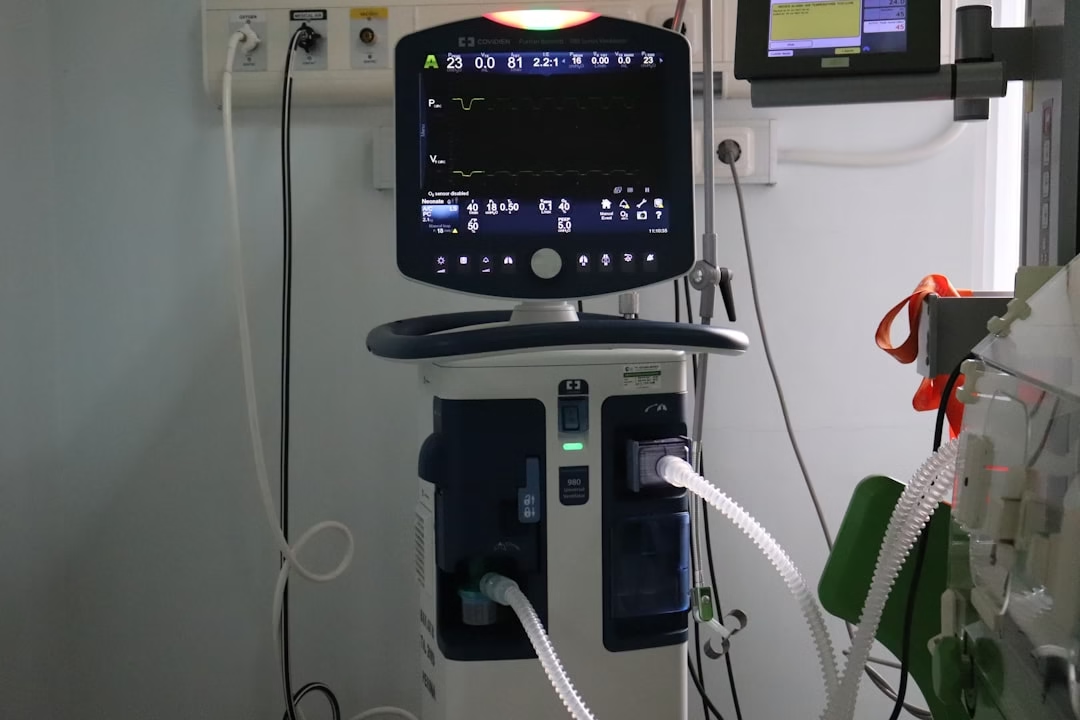
Mask fitting is particularly important for non-invasive ventilation. The ResMed AirFit F30i mask requires proper adjustment to prevent leaks. Regular replacement of consumables like tubes and filters maintains performance.
The Health Authority Abu Dhabi regulations mandate specific maintenance schedules for home medical equipment. Compliance ensures continuous equipment reliability and patient safety.
Home Ventilator Options UAE Advantages
Exploring home ventilator options in UAE reveals multiple patient benefits. These systems enable personalized care in comfortable environments. Patients experience reduced infection exposure compared to hospitals. Furthermore, family involvement in care improves emotional support.
Technological integration allows remote monitoring by healthcare teams. Doctors can adjust settings based on transmitted data. This proactive approach prevents complications before they become emergencies. Additionally, modern devices are increasingly user-friendly with intuitive interfaces.
Cost-effectiveness represents another significant advantage. Home care reduces repeated hospitalization expenses. Insurance coverage for home equipment continues to expand in the UAE. The UAE government healthcare regulations increasingly support home-based care models.
Ultimately, the right home ventilator options empower patients to manage their conditions confidently. This independence significantly enhances quality of life despite serious respiratory challenges.
Common Patient Questions
Patients often inquire about equipment noise levels. Modern ventilators operate quietly, typically below 30 decibels. This ensures undisturbed sleep for patients and bed partners. Another frequent question concerns power consumption. Most home ventilators use less electricity than standard household appliances.
Travel considerations generate many questions. Portable concentrators like the Inogen One G5 are airline-approved. However, advance coordination with airlines is essential. Patients also ask about equipment lifespan. With proper maintenance, quality ventilators typically last 5-7 years.
Emergency preparedness questions are common. Patients should always have backup oxygen tanks available. Additionally, power backup solutions are mandatory in the UAE’s climate. Establishing clear emergency protocols with healthcare providers is crucial.
Expert Recommendations and Considerations
Medical professionals emphasize individualized equipment selection. The choice between non-invasive and invasive ventilation depends on comprehensive assessment. Factors include respiratory muscle strength, oxygenation needs, and patient coordination. Neurological status also significantly influences this decision.
Environmental modifications enhance home ventilation effectiveness. Air purification systems reduce particulate exposure in dusty conditions. Proper room ventilation maintains optimal oxygen levels. Temperature and humidity control prevent equipment malfunctions.
Caregiver training remains equally important as equipment selection. Family members must recognize alarm signals and respond appropriately. They should understand basic troubleshooting and emergency procedures. Regular refresher training maintains competency.
Follow-up care involves multidisciplinary teams. Respiratory therapists, physicians, and equipment providers collaborate continuously. This team approach ensures optimal long-term outcomes for patients using home ventilation systems.
Frequently Asked Questions
What are the main home ventilator options in UAE? The primary options include non-invasive (CPAP/BiPAP) and invasive mechanical ventilators, each serving different medical needs.
How often should ventilator filters be replaced? Disposable filters typically require monthly replacement, while reusable filters need weekly cleaning according to manufacturer guidelines.
Can I travel with my home ventilator? Yes, many modern devices are portable and airline-approved, though advance coordination with carriers is essential.
What backup power solutions are recommended? UPS systems provide immediate backup, while generators offer longer-term solutions during extended power outages.
How do I clean my ventilator equipment? Daily wiping with mild disinfectant, weekly circuit disinfection, and regular filter maintenance ensure proper hygiene.
What emergency protocols should I establish? Clear plans for power failure, equipment malfunction, and medical emergencies should be documented and practiced regularly.
Conclusion
Selecting appropriate home ventilator options requires careful consideration of medical needs and lifestyle factors. Both non-invasive and invasive systems offer life-changing benefits when properly matched to patient conditions. The advanced healthcare infrastructure in the UAE supports comprehensive home ventilation programs.
Successful home ventilation depends on proper equipment selection, thorough training, and consistent maintenance. Emergency preparedness ensures patient safety during unexpected situations. Furthermore, technological advances continue to improve device functionality and user experience.
Ultimately, the right home ventilator options empower patients to manage respiratory conditions effectively. This approach maintains dignity and quality of life despite significant health challenges. For personalized guidance on respiratory equipment and products, contact our respiratory specialists today.

