

Home Healthcare vs Nursing Home UAE – Complete Guide
Managing respiratory conditions in UAE? You face crucial care decisions. The choice between home healthcare and nursing facilities significantly impacts quality of life. Both options offer distinct advantages for patients requiring ongoing medical support. This comprehensive analysis examines costs, quality factors, and practical considerations specific to the Emirates healthcare landscape.
Understanding these options helps families make informed decisions. The UAE’s healthcare system continues evolving rapidly. Consequently, patients now access increasingly sophisticated care models. Home healthcare services have expanded considerably. Meanwhile, nursing homes also enhance their medical capabilities. This guide provides detailed comparison insights.
At Oxydubai, trusted by 10,000+ UAE patients with premium respiratory equipment and products. Our experience supporting both home-based care and facility-based treatment informs this analysis. We understand the critical importance of matching care settings to individual medical needs and lifestyle preferences.
Need Respiratory Solutions?
Understanding Home Healthcare vs Nursing Home UAE
Home healthcare brings medical professionals to the patient’s residence. Services range from basic assistance to complex medical care. Nurses, therapists, and aides provide scheduled visits. Patients maintain independence while receiving necessary support. This model proves particularly effective for chronic conditions requiring ongoing management.
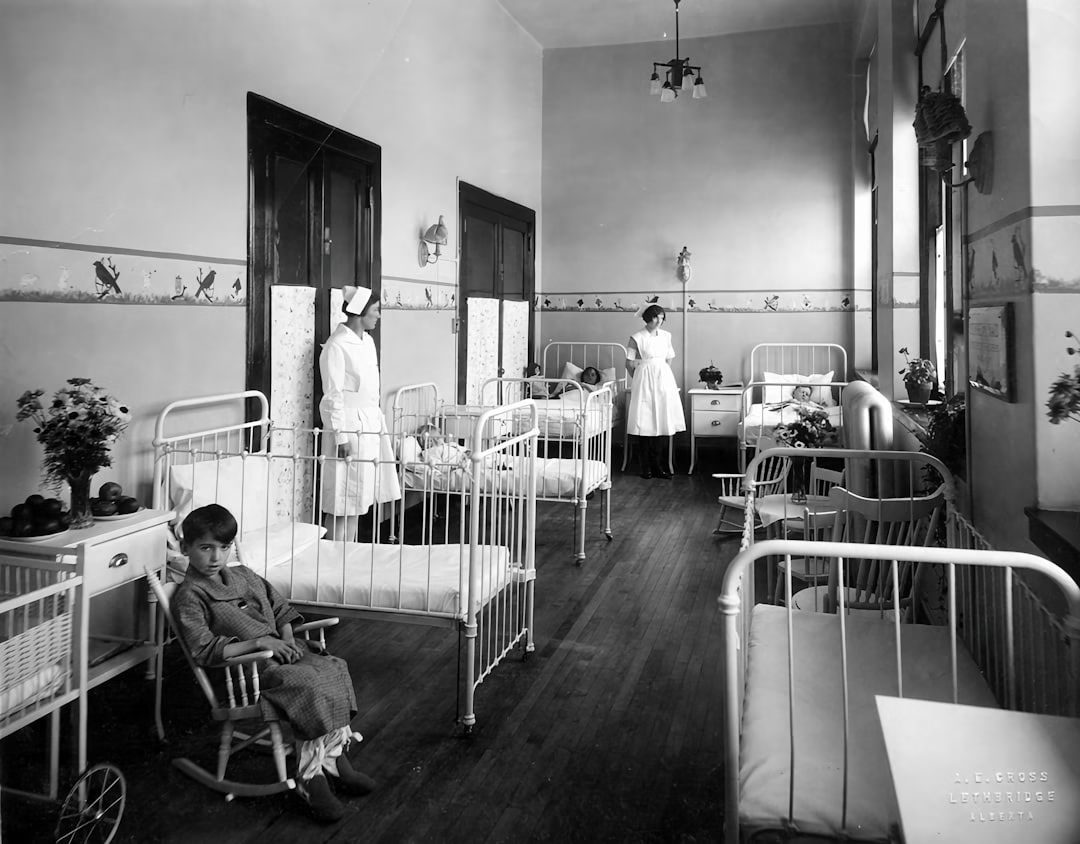
Nursing homes offer 24/7 residential care facilities. Staff includes medical professionals across various specialties. These institutions provide comprehensive support for patients needing constant supervision. The environment includes medical equipment, dining facilities, and social activities. Many facilities now specialize in specific conditions like respiratory diseases.
The UAE Ministry of Health establishes standards for both care models. Regulations ensure quality and safety across healthcare settings. Additionally, the Dubai Health Authority healthcare guidelines provide specific frameworks for elder care and long-term treatment. Understanding these regulations helps families evaluate options effectively.
Benefits of Residential Care Facilities
Nursing facilities provide constant medical supervision. This continuous monitoring benefits patients with complex conditions. Staff availability ensures immediate response to emergencies. Furthermore, these institutions offer structured daily routines. Patients receive medication management, physical therapy, and social engagement opportunities.
Specialized equipment represents another advantage. Facilities maintain advanced medical devices like the ResMed Astral 150 ventilator. This equipment supports patients with severe respiratory conditions. Additionally, nursing homes provide nutritional management and housekeeping services. These comprehensive services reduce family caregiving burdens.
Social interaction opportunities significantly enhance quality of life. Group activities combat isolation and depression. Meanwhile, the Health Authority Abu Dhabi regulations ensure facilities maintain proper staff-to-patient ratios. This regulatory oversight guarantees adequate attention for all residents.
Home Healthcare vs Nursing Home UAE Features
Cost structures differ substantially between these options. Home healthcare typically involves hourly or visit-based pricing. Nursing homes generally charge monthly all-inclusive rates. However, specific medical needs significantly influence final costs. Equipment requirements, such as the Inogen One G5 portable oxygen concentrator, affect home care expenses.
Medical capability represents another distinguishing feature. Nursing facilities provide comprehensive on-site services. Conversely, home care focuses on specific treatment plans. The World Health Organization respiratory health guidelines emphasize appropriate care setting selection. Matching patient needs to service capabilities ensures optimal outcomes.
Flexibility varies considerably between models. Home healthcare allows customized scheduling and service selection. Nursing homes offer less individual schedule control. However, they provide consistent round-the-clock availability. This reliability benefits patients requiring continuous monitoring and immediate intervention capabilities.
Care Setting Specifications
Staff qualifications follow UAE healthcare standards across both options. Nursing homes employ multidisciplinary teams including physicians, nurses, and therapists. Home healthcare typically involves visiting nurses and caregivers. The UAE Ministry of Health medical standards ensure proper credentialing for all healthcare providers.
Equipment availability differs between settings. Nursing homes maintain extensive medical inventories. Home care may require equipment rental or purchase. For example, the ResMed AirSense 11 CPAP machine proves essential for sleep apnea patients. Understanding equipment needs helps determine the most practical care setting.
Environmental factors significantly influence care quality. Home environments offer familiar surroundings and personal space. Nursing facilities provide optimized accessibility and safety features. Both settings must comply with UAE government healthcare regulations regarding physical infrastructure and emergency preparedness.
Expert Medical Advice?
Setup and Maintenance Requirements
Initial establishment varies significantly between options. Home healthcare requires minimal setup beyond equipment acquisition. The ResMed AirMini compact CPAP exemplifies portable home care technology. Nursing home admission involves comprehensive assessment and care planning processes.
Ongoing maintenance demands also differ. Home care requires family coordination of appointments and supplies. Nursing facilities handle all scheduling and inventory management. This administrative burden reduction represents a significant advantage for busy families. However, it comes with corresponding cost implications.
Adaptability to changing medical needs represents another consideration. Home care services can scale up or down relatively easily. Nursing home adjustments may require care plan modifications or room transfers. Understanding these operational aspects helps families prepare for long-term care evolution.
Home Healthcare vs Nursing Home UAE Advantages
Personalization represents a key home care benefit. Treatment plans adapt to individual preferences and routines. Patients maintain control over daily schedules and activities. This autonomy significantly impacts psychological well-being. Furthermore, familiar environments reduce stress and confusion for cognitively impaired patients.
Comprehensive services distinguish nursing facilities. All medical, personal, and social needs receive attention within one location. This integration simplifies complex care coordination. Additionally, the ResMed AirFit F30i mask exemplifies specialized equipment available in facility settings. Access to such technology enhances treatment effectiveness.
Cost-effectiveness depends on care intensity requirements. Home healthcare often proves more economical for patients needing limited daily assistance. Nursing facilities become cost-competitive for patients requiring continuous monitoring and multiple daily interventions. Accurate assessment of medical needs enables optimal financial planning.
Common Care Questions
How do payment structures compare? Home healthcare typically involves out-of-pocket or insurance reimbursement for specific services. Nursing homes usually charge comprehensive monthly rates. Some insurance policies cover portions of both options. Understanding policy details prevents unexpected financial burdens.
What quality indicators should families evaluate? Staff qualifications, patient-to-caregiver ratios, and facility accreditation matter significantly. Additionally, infection control procedures and emergency response capabilities impact safety. The Dubai Health Authority healthcare guidelines provide specific quality benchmarks for evaluation.
Can care settings transition as needs change? Many patients begin with home healthcare and transition to nursing facilities as conditions progress. Conversely, some nursing home residents return home with supported care after rehabilitation. Understanding these pathways helps families develop flexible long-term care strategies.
Expert Recommendations
Medical professionals emphasize individualized assessment. The optimal choice depends on specific medical requirements, personal preferences, and financial considerations. Comprehensive evaluation should include physician input, family capability assessment, and patient lifestyle preferences. This multidimensional approach ensures appropriate care setting selection.
Technology integration enhances both care models. Advanced equipment like the Inogen One G5 portable oxygen concentrator enables more effective home care. Meanwhile, nursing facilities benefit from electronic health records and remote monitoring systems. These technological advancements continuously improve care quality across settings.
Proactive planning prevents crisis decision-making. Families should research options before urgent needs arise. Visiting facilities, interviewing home care agencies, and understanding costs prepares for informed choices. Additionally, consulting with medical professionals like those available through contact our respiratory specialists provides valuable insights.
Frequently Asked Questions
What is the average cost difference between home healthcare and nursing homes in UAE? Home care typically costs 30-50% less for patients requiring limited daily assistance. However, extensive care needs can equalize expenses.
Does insurance cover both options in the Emirates? Many comprehensive insurance policies provide partial coverage for both. Specific terms vary significantly between providers and policy levels.
How does home healthcare vs nursing home UAE compare for dementia patients? Early-stage dementia often benefits from home care familiarity. Advanced stages typically require nursing facility security and constant supervision.
What medical equipment is typically needed for home healthcare? Equipment varies by condition but may include hospital beds, mobility aids, and specialized devices like oxygen concentrators or CPAP machines.
How do I verify the quality of nursing homes in UAE? Check DHA or MOH accreditation status, visit facilities personally, review inspection reports, and speak with current residents’ families.
Can home healthcare providers administer intravenous medications? Yes, qualified nursing staff can provide IV therapy at home, including antibiotics, hydration, and other prescribed treatments.
Conclusion
The home healthcare vs nursing home UAE decision requires careful consideration of multiple factors. Medical needs, personal preferences, financial resources, and family support all influence the optimal choice. Both options provide quality care when properly selected and implemented. The UAE’s evolving healthcare infrastructure continues enhancing both models’ capabilities.
Technological advancements increasingly blur traditional boundaries between care settings. Portable medical equipment enables sophisticated home treatment. Meanwhile, nursing facilities incorporate more personalized approaches. This convergence benefits patients through expanded options and improved quality across the care continuum.
Ultimately, the decision should prioritize patient well-being and medical appropriateness. Consulting healthcare professionals, visiting facilities, and understanding all cost components ensures informed choices. Whether selecting home-based care or facility-based treatment, the UAE offers quality options for respiratory patients and seniors requiring medical support.

