

Home Care vs Hospital UAE: Cost-Benefit Guide
Managing respiratory conditions in the UAE? Choosing between home care and a hospital stay is a critical decision. This choice impacts patient recovery, family well-being, and financial stability. Consequently, a detailed cost-benefit analysis is essential. Home care offers familiar surroundings and personalized attention. Conversely, hospital stays provide immediate access to intensive medical support. In the UAE’s advanced healthcare landscape, both options have evolved significantly. Therefore, understanding the nuances can lead to better health outcomes and cost savings. At Oxydubai, trusted by 10,000+ UAE patients, we provide premium respiratory equipment and products to empower home-based care solutions.
The UAE government actively promotes healthcare accessibility and quality. However, medical costs can be substantial for long-term conditions. Home care often reduces these expenses dramatically. Moreover, it aligns with global trends towards patient-centered, decentralized healthcare. Technological advancements in medical devices now enable complex treatments at home. For instance, modern ventilators and oxygen concentrators are both reliable and user-friendly. This guide will analyze the financial, medical, and emotional factors. Ultimately, our goal is to help you make an informed, confident decision for your loved one’s care.
Need Respiratory Solutions?
Understanding Home Care vs Hospital UAE
The core difference lies in the care environment and resource allocation. Hospital care involves 24/7 supervision by rotating medical teams in a clinical setting. It is indispensable for acute, unstable, or post-surgical conditions. On the other hand, home care shifts the treatment setting to the patient’s residence. This model utilizes family support alongside visiting nurses and advanced medical equipment. In the UAE, both models are regulated by authorities like the Dubai Health Authority healthcare guidelines and the Health Authority Abu Dhabi regulations.
Choosing between them requires evaluating medical necessity. For chronic respiratory management, home care is increasingly viable. Devices like the ResMed AirSense 11 CPAP machine offer hospital-grade therapy at home. Importantly, the initial assessment must be conducted by a qualified physician. They will determine if the patient’s condition is stable enough for a home-based regimen. Furthermore, a robust support plan including equipment maintenance and emergency protocols is crucial. This foundational understanding frames our subsequent cost-benefit analysis.
Benefits of Home-Based Treatment
Home-based treatment offers profound psychological and practical advantages. Patients typically experience less stress and better sleep in their own beds. This familiar environment can accelerate recovery and improve mental health. Additionally, the risk of hospital-acquired infections is eliminated. Families also benefit from greater involvement and flexibility in care schedules. Financially, the savings are often substantial when compared to prolonged hospitalization. These savings can be redirected towards high-quality equipment and private nursing.
From a medical perspective, consistent use of prescribed therapy is often higher at home. For example, a patient is more likely to use their ResMed AirMini compact CPAP nightly in comfort. Moreover, personalized care leads to better management of chronic conditions like COPD or sleep apnea. The World Health Organization respiratory health guidelines recognize the value of integrated people-centered care models. Therefore, for stable patients, the benefits of home care frequently outweigh those of an institutional stay.
Home Care vs Hospital UAE Features
A direct feature comparison highlights the unique value of each option. Hospital care provides immediate access to diagnostics, specialists, and emergency interventions. Its infrastructure supports complex, multi-system illnesses. Conversely, modern home care is defined by technological features. Portable oxygen concentrators, such as the Inogen One G5 portable oxygen concentrator, offer freedom and mobility. Similarly, advanced ventilators like the ResMed Astral 150 ventilator bring life-support technology into the home.
Key features of a successful home care setup include remote monitoring capabilities and user-friendly interfaces. These allow clinicians to track patient data virtually, ensuring safety. Furthermore, equipment reliability and quiet operation are essential for patient compliance and comfort. In contrast, hospital features revolve around centralization and scalability of resources. The choice depends on which set of features aligns with the patient’s specific clinical needs and personal preferences. This analysis is central to the home care vs hospital UAE decision.
Medical Equipment Specifications
Specifications for home medical equipment must meet rigorous standards. Devices used domestically are often subject to the same UAE Ministry of Health medical standards as hospital gear. Oxygen concentrators, for instance, must deliver a precise flow rate (e.g., 1-6 LPM) with consistent purity (≥90%). CPAP machines require adjustable pressure settings, data tracking, and humidification. The ResMed AirFit F30i mask specification includes a quiet air diffuser and magnetic headgear for comfort.
Understanding these specs ensures the equipment matches the prescription. Weight, noise level (decibels), and power consumption are critical for home use. Battery life and portability specifications enable patient mobility. Importantly, equipment should be backed by local service and warranty support. This guarantees prompt maintenance and minimizes downtime. By selecting devices with appropriate specifications, the home environment can be transformed into a safe, effective clinical space. This technical readiness is a pillar of the cost-benefit argument for home care.
Expert Medical Advice?
Setup and Maintenance Protocols
Proper setup is the first step to safe and effective home care. Initially, a qualified technician should install and demonstrate all equipment. They will ensure oxygen concentrators are placed in well-ventilated areas away from heat sources. Similarly, CPAP machines need a stable bedside setup with access to distilled water for humidifiers. Patients and caregivers receive thorough training on daily operation, cleaning, and basic troubleshooting. This process is often streamlined by providers like Oxydubai, who offer comprehensive support.
Maintenance is an ongoing responsibility that prevents failures. Daily cleaning of masks and tubing is essential for hygiene and performance. Moreover, devices require regular filter changes and periodic professional servicing. Establishing a maintenance schedule is crucial. Consequently, equipment longevity is maximized, and the risk of unexpected breakdowns is minimized. Adherence to these protocols ensures the home care environment remains as reliable as a clinical one, protecting the patient’s health and the family’s investment.
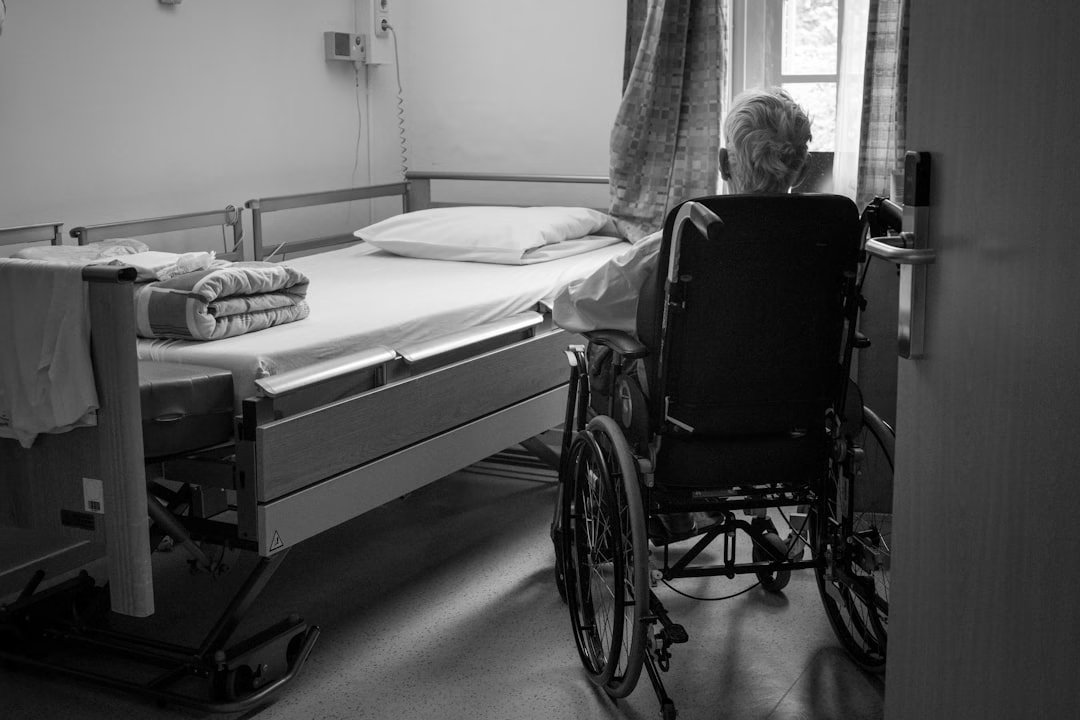
Home Care vs Hospital UAE Advantages
The advantages of home care in the UAE context are multifaceted. Financially, it avoids daily hospital room fees, which can be exorbitant. Instead, costs are focused on equipment rental or purchase and periodic nursing visits. Emotionally, patients maintain dignity, independence, and family connections. Medically, it reduces exposure to pathogens and allows for tailored, consistent therapy. For the healthcare system, it frees up valuable hospital beds for acute cases. This aligns with broader UAE government healthcare regulations focusing on system efficiency.
However, hospital advantages remain vital for specific cases. These include rapid response to complications, access to surgical facilities, and multidisciplinary teams. The decision is not static; many patients transition from hospital to home care as they stabilize. This integrated approach leverages the advantages of both models. Ultimately, the home care vs hospital UAE advantage tilts towards home for managing stable chronic conditions. It delivers comparable clinical outcomes with significantly improved quality of life and reduced financial burden.
Common Questions Answered
Families always have important questions when considering home care. Is home care safe for serious conditions? With proper equipment and planning, yes. What is the typical cost difference? Home care can reduce long-term costs by 40-60% compared to extended hospitalization. Does insurance cover home medical equipment? Many UAE insurers now cover prescribed devices, but pre-approval is essential. How do I handle an emergency at home? A clear emergency plan including 24/7 support contacts and backup oxygen is mandatory.
Other questions involve equipment sourcing and training. Where can I find reliable equipment? Reputable suppliers like Oxydubai offer certified products with installation support. Will we receive training? Yes, comprehensive training for patients and caregivers is a standard service. Can we travel with home care equipment? Absolutely, portable devices are designed for mobility. Answering these questions dispels fears and builds confidence in the home care pathway, making the cost-benefit analysis more personal and tangible.
Expert Recommendations for UAE Families
Medical experts recommend a structured decision-making process. First, obtain a detailed medical assessment from a pulmonologist or treating physician. Second, consult with a discharge planner or home care coordinator to evaluate your home environment. Third, choose equipment from reputable brands that offer local service support. Experts often recommend starting with a trial period for equipment at home to ensure patient comfort and compliance. Additionally, they advise joining patient support groups for shared experiences and advice.
Finally, establish a clear partnership with a healthcare provider. Regular follow-ups, either in-person or via telehealth, are non-negotiable. Experts also stress the importance of caregiver well-being; respite care should be part of the plan. By following these professional recommendations, families can navigate the home care vs hospital UAE dilemma effectively. For personalized guidance, you can always contact our respiratory specialists for a consultation tailored to your specific situation.
Frequently Asked Questions
Q1: What are the main cost factors in home care vs hospital UAE?
A1: Hospital costs include bed charges, medication, tests, and specialist fees. Home care costs center on medical equipment (purchase/rental), nursing visits, and consumables.
Q2: Is home care covered by UAE health insurance?
A2: Many comprehensive plans now cover prescribed home medical equipment and nursing. However, you must check your policy details and obtain pre-authorization.
Q3: How do I ensure the quality of home care equipment?
A3: Choose devices that are FDA/CE certified and comply with UAE regulations. Purchase from accredited suppliers like Oxydubai who offer warranty and service.
Q4: What is the most challenging part of transitioning to home care?
A4: The initial adjustment for the patient and caregiver, and establishing a reliable routine for equipment use and maintenance.
Q5: Can home care handle ventilator-dependent patients?
A5: Yes, with advanced ventilators like the ResMed Astral 150 and full nursing support, many ventilator-dependent patients can live safely at home.
Q6: How does home care vs hospital UAE impact long-term recovery?
A6: Studies show home care often leads to better psychological well-being and patient compliance with therapy, which can positively influence long-term recovery outcomes for chronic conditions.
Conclusion
In conclusion, the choice between home care and hospital stay in the UAE requires careful analysis. The financial benefits of home care are compelling, especially for long-term respiratory management. However, the clinical suitability of the patient is the foremost consideration. With advancements in medical technology, the gap in care quality between the two settings is narrowing. Therefore, for stable chronic conditions, a well-planned home care regimen offers superior quality of life and significant cost savings.
We encourage families to engage with healthcare providers, ask detailed questions, and explore high-quality respiratory equipment and products. The journey towards optimal care is collaborative. By understanding the detailed cost-benefit analysis of home care vs hospital UAE, you can make a decision that ensures the best possible health and happiness for your loved one. Ultimately, the goal is a recovery journey that is clinically effective, financially sustainable, and personally dignified.

