

High-Flow Oxygen Therapy – Complete Guide
Introduction
Searching for oxygen therapy equipment? High-Flow Oxygen Therapy (HFOT) is a critical advancement for patients who find standard oxygen delivery insufficient. This therapy provides precise, warmed, and humidified oxygen at higher flow rates. Consequently, it significantly improves oxygenation and reduces the work of breathing. In the UAE’s diverse climate, managing respiratory conditions requires reliable and advanced solutions. Therefore, understanding this therapy is essential for optimal patient care.
High-Flow Oxygen Therapy offers substantial medical benefits. It enhances comfort, improves patient compliance, and can prevent the need for more invasive ventilation. For individuals with conditions like severe COPD, pneumonia, or post-operative respiratory failure, it can be life-changing. The UAE’s advanced healthcare infrastructure supports the use of such sophisticated medical technologies. As a result, patients have access to world-class respiratory care.
At Oxydubai, we are committed to supporting respiratory health across the region. Trusted by 10,000+ UAE patients, we provide premium respiratory equipment and products. Our range includes the latest devices designed for efficacy and comfort. We ensure every product meets the highest medical standards. Ultimately, our goal is to empower patients and caregivers with the tools for better breathing.
Need Respiratory Solutions?
Understanding High-Flow Oxygen Therapy
High-Flow Oxygen Therapy delivers oxygen at flow rates that meet or exceed a patient’s peak inspiratory demand. Unlike traditional methods, it uses an air-oxygen blender, a humidifier, and a heated circuit. This system provides accurate oxygen concentration levels. Moreover, the gas is warmed and humidified to mimic natural airway conditions. This process protects the respiratory mucosa and improves secretion clearance.
The therapy’s mechanism provides several physiological advantages. First, it flushes carbon dioxide from the anatomical dead space in the upper airways. Second, it generates a small amount of positive airway pressure, which can help keep alveoli open. For patients using a ResMed AirSense 11 CPAP machine for sleep apnea, HFOT represents a different, often complementary, approach for acute hypoxemic respiratory failure. It is a cornerstone of modern respiratory support.
Medical guidelines, such as those from the World Health Organization respiratory health guidelines, recognize the importance of advanced oxygen delivery systems. In the UAE, adherence to UAE Ministry of Health medical standards ensures these devices are used safely and effectively. Understanding these principles is the first step toward implementing successful treatment.
Benefits of Advanced Oxygen Delivery
Advanced oxygen delivery systems like HFOT offer transformative benefits. Primarily, they provide superior patient comfort compared to dry, cold oxygen from standard nasal cannulas. The warmed and humidified air prevents nasal dryness and throat irritation. Therefore, patients can tolerate higher flow rates for longer periods, which is crucial for therapeutic success.
Clinically, these systems improve oxygenation more efficiently. They reduce the patient’s respiratory rate and work of breathing, allowing distressed respiratory muscles to rest. Additionally, improved secretion management leads to fewer pulmonary complications. For mobility, a device like the Inogen One G5 portable oxygen concentrator offers freedom, but HFOT provides a higher level of acute care support. Each technology serves a distinct purpose in the care continuum.
From a healthcare system perspective, effective High-Flow Oxygen Therapy can decrease ICU admissions and shorten hospital stays. It acts as a bridge, potentially avoiding the need for invasive mechanical ventilation. Compliance with Dubai Health Authority healthcare guidelines ensures these benefits are realized safely across clinical settings in the Emirates.
High-Flow Oxygen Therapy Features
Modern High-Flow Oxygen Therapy devices incorporate several key features. Typically, they include a precise air-oxygen blender capable of delivering FiO2 from 21% to 100%. They also integrate an active humidification system with a heated wire circuit. This combination ensures optimal conditioning of the delivered gas. Furthermore, integrated flow generators can achieve outputs of up to 60 liters per minute, catering to high patient demand.
Safety features are paramount in these systems. Built-in sensors monitor oxygen concentration and temperature. Alarms alert clinicians to any deviation from set parameters. For example, devices like the ResMed Astral 150 ventilator often include HFOT modes, blending versatility with high performance. These integrated safety mechanisms provide peace of mind for both patients and healthcare providers.
User-friendly interfaces are another critical feature. Clear displays show flow, FiO2, and temperature settings. This simplicity allows for quick adjustments at the bedside. When combined with comfortable patient interfaces like the ResMed AirFit F30i mask, the entire system promotes effective and tolerable therapy. These features collectively define the modern standard for advanced oxygen care.
Therapy System Specifications
The technical specifications of HFOT systems determine their clinical application. Flow rate capability is the most critical spec, with high-performance units delivering 60 L/min or more. Oxygen concentration precision is also vital, often within +/- 2% of the set value. Additionally, humidification capacity must match the high flow to prevent drying. The water chamber size dictates how long the system can run without a refill, impacting nursing workload.
Device dimensions and portability are practical considerations. While primarily for bedside use, some units are designed for easier transport within a hospital. Noise level is another key specification, as a quiet device reduces patient anxiety and disturbance. For instance, the ResMed AirMini compact CPAP emphasizes quiet operation, a principle that extends to high-flow devices. These specs ensure the device fits its intended environment.
Power requirements and backup options are essential for reliability. Units must operate consistently, aligning with Health Authority Abu Dhabi regulations for medical equipment safety. Understanding these specifications helps clinicians choose the right device. Consequently, they can match the technology to the patient’s specific physiological needs and the clinical setting’s demands.
Expert Medical Advice?
Setup and Maintenance
Proper setup of High-Flow Oxygen Therapy is straightforward but must be meticulous. First, connect the device to a power source and oxygen supply. Next, fill the humidification chamber with sterile water to the indicated level. Then, attach the heated circuit and select the appropriate patient interface. Finally, power on the device and set the prescribed parameters: flow rate, FiO2, and temperature. Always perform a pre-use check to ensure all connections are secure.
Daily maintenance is crucial for performance and safety. This includes checking and refilling the water chamber as needed. The patient interface and circuit should be inspected for condensation or damage. Filters must be checked and replaced according to the manufacturer’s schedule. Following UAE government healthcare regulations for medical device maintenance is a legal and ethical requirement. Regular care prevents malfunctions and ensures consistent therapy delivery.
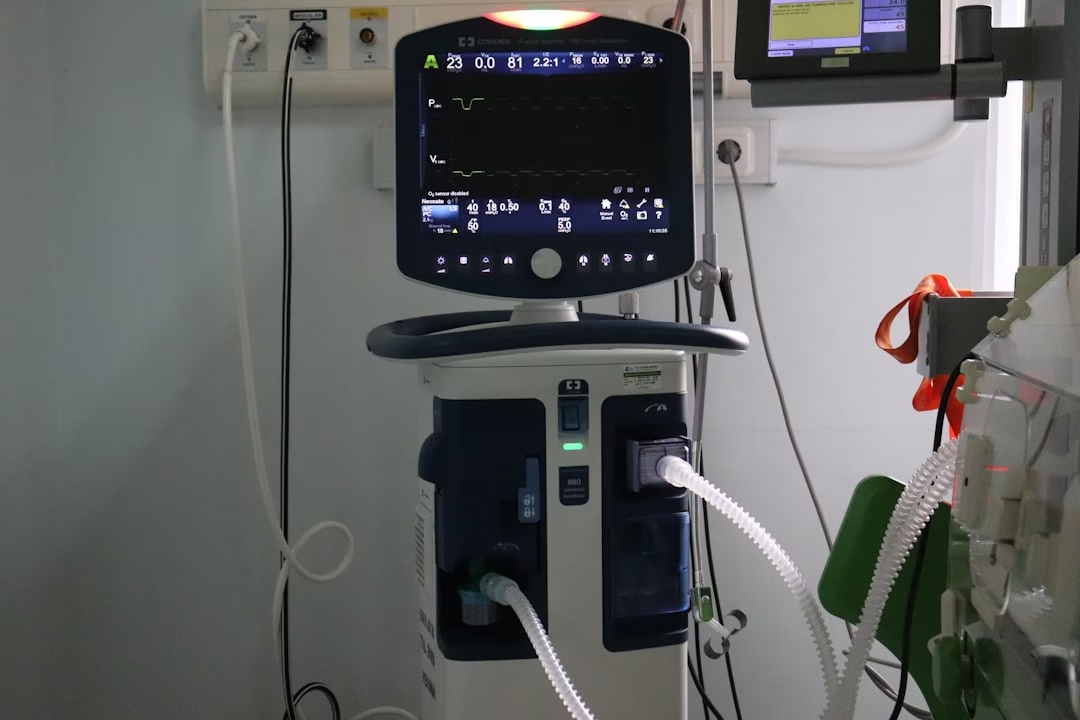
Long-term maintenance involves more comprehensive checks. Servicing by qualified technicians should occur at intervals specified by the manufacturer. Keeping a log of all maintenance activities is best practice. For all your equipment needs and support, explore our full range of respiratory equipment and products. A well-maintained system is reliable, safe, and provides the therapeutic benefits your patient depends on.
High-Flow Oxygen Therapy Advantages
The advantages of High-Flow Oxygen Therapy are clear in clinical outcomes. It delivers a consistent and precise FiO2, which is difficult with traditional systems. The high flows also reduce room air entrainment, making oxygenation more predictable. Moreover, the positive pharyngeal pressure it generates can improve lung mechanics. This is particularly beneficial for patients with conditions like acute hypoxemic respiratory failure.
For patient-centered care, the comfort advantage cannot be overstated. Well-humidified air prevents the discomfort of dry nasal passages. This leads to better tolerance and adherence to therapy. In contrast, a standard nasal cannula often causes irritation at flows above 4-6 L/min. Therefore, HFOT enables the delivery of higher oxygen levels without compromising patient comfort. It represents a significant step forward in supportive care.
From a system efficiency standpoint, effective High-Flow Oxygen Therapy can reduce healthcare costs. By potentially preventing intubation and ICU admission, it saves significant resources. It empowers clinicians with a powerful tool in the ward or emergency department. For comprehensive solutions that include such advanced options, contact our respiratory specialists. We can help you navigate the best technology for your specific situation.
Common Questions Answered
Patients and caregivers often have questions about this advanced therapy. A common query is about who qualifies for HFOT. Typically, it is for patients with moderate to severe hypoxemia who are not improving with standard oxygen. Another frequent question concerns noise levels. Modern devices are designed to be very quiet, minimizing sleep disruption. Additionally, people ask about mobility; while primarily for bedside use, some systems allow limited movement.
Questions about safety are also prevalent. Users want to know about overheating or humidity issues. Reputable devices have multiple safety cut-offs and alarms to prevent such problems. Another area of inquiry is the cost and availability in the UAE. Advanced medical equipment is accessible through licensed providers who ensure compliance with local regulations. We recommend consulting with a specialist to get accurate, personalized information.
Understanding the difference between HFOT and CPAP is another common theme. While both can deliver positive pressure, CPAP provides a constant pressure for airway splinting, often for sleep apnea. HFOT provides high-flow gas with variable pressure, primarily for oxygenation. For those managing sleep apnea with a device like the ResMed AirSense 11 CPAP machine, it’s important to know these are distinct therapies for different, though sometimes overlapping, conditions.
Expert Recommendations for Use
Medical experts provide clear recommendations for implementing HFOT. Initiation should be based on clinical assessment including blood gas analysis and oxygen saturation monitoring. Starting parameters are often a flow rate of 30-40 L/min and an FiO2 titrated to achieve SpO2 > 92%. Subsequently, weaning should be gradual, reducing FiO2 first before decreasing the flow rate. Close monitoring throughout the process is non-negotiable for patient safety.
Choosing the right equipment is another key recommendation. Select a device from a reputable manufacturer with reliable local service support. Ensure it meets the specific flow and humidity needs of your patient population. Interfaces should be chosen for patient comfort and seal; a comfortable patient is a compliant patient. Experts also stress the importance of training for all clinical staff involved in the therapy’s delivery and monitoring.
Finally, experts emphasize integrating HFOT into broader clinical guidelines. Its use should align with protocols for specific conditions like COPD exacerbations or pneumonia. Staying updated with evidence-based practices, as reflected in resources like the World Health Organization respiratory health guidelines, is crucial. For tailored advice and access to recommended equipment, contact our respiratory specialists. We provide the guidance and technology for optimal respiratory care.
Frequently Asked Questions
Q: What is High-Flow Oxygen Therapy used for?
A: It is used to treat moderate to severe hypoxemia in conditions like pneumonia, COPD, heart failure, and post-operative respiratory failure when standard oxygen therapy is insufficient.
Q: How is it different from a regular oxygen concentrator?
A: Standard concentrators deliver cold, dry oxygen at lower flows (typically 1-5 L/min). HFOT devices blend air and oxygen, deliver much higher flows (up to 60 L/min), and actively warm and humidify the gas.
Q: Can I use High-Flow Oxygen Therapy at home?
A: While primarily a hospital-based therapy, some specific models are approved for home use in complex chronic cases under strict medical supervision and with proper patient/caregiver training.
Q: Is the therapy uncomfortable for patients?
A> No, it is generally more comfortable than standard high-flow oxygen because the warmed, humidified air prevents the dryness and irritation associated with cold, dry oxygen.
Q: How do I know if I need High-Flow Oxygen Therapy?
A: This is a clinical decision made by a doctor based on oxygen saturation levels, blood gas results, respiratory rate, and the overall severity of your condition. Do not attempt to self-prescribe.
Q: Where can I find reliable High-Flow Oxygen Therapy equipment in the UAE?
A: For trusted and medically approved devices, explore our curated selection of respiratory equipment and products. We ensure all products meet UAE regulatory standards.
Conclusion
High-Flow Oxygen Therapy represents a vital advancement in respiratory support. It fills the crucial gap when standard oxygen delivery fails to meet patient needs. By providing precise, comfortable, and physiologically beneficial therapy, it improves outcomes and enhances quality of life. The technology’s benefits are backed by robust clinical evidence and integrated into modern medical guidelines globally and within the UAE.
Implementing this therapy successfully requires understanding its features, benefits, and proper maintenance. Additionally, it demands access to reliable equipment from reputable suppliers. In the UAE’s advanced healthcare landscape, patients and providers have the opportunity to utilize these life-enhancing technologies. Staying informed and choosing the right partners for equipment and support is key to navigating this field effectively.
Ultimately, the goal is to ensure every patient with respiratory insufficiency receives the appropriate level of care. Whether managing a chronic condition or an acute episode, advanced options like High-Flow Oxygen Therapy are essential tools. For expert guidance and access to premium devices, we invite you to connect with our team. Together, we can ensure that when standard therapy isn’t enough, effective solutions are within reach.