

Dubai Ambulance Services: Emergency Oxygen Support Protocols
Dubai Ambulance Services
Medical emergencies demand rapid and expert intervention. This is especially true for respiratory distress. Dubai Ambulance Services represent a critical frontline response system. They are equipped with advanced life-support technologies. However, their effectiveness relies on precise protocols and immediate action. Additionally, the integration of pre-hospital care with hospital systems is vital. This guide explores the essential emergency oxygen support protocols. Furthermore, it details the operational framework that ensures patient survival and recovery. Understanding these systems provides crucial public health insights.
Understanding Dubai Ambulance Services
Dubai’s emergency medical system is world-class. It operates under the Dubai Corporation for Ambulance Services (DCAS). This organization manages a vast fleet of advanced life support ambulances. Each unit is a mobile intensive care unit. Therefore, paramedics can initiate critical care at the scene. They are trained to handle severe respiratory crises. For example, they manage conditions like asthma attacks and COPD exacerbations. Their response time is a key performance metric. Consequently, they consistently strive for rapid deployment across the emirate.
Dubai Ambulance Services Benefits
The primary benefit is immediate access to professional medical care. Paramedics provide life-saving interventions before hospital arrival. This significantly improves patient outcomes for critical cases. Specifically, for oxygen-dependent patients, this system is a lifeline. Moreover, the service uses state-of-the-art equipment and evidence-based protocols. This ensures consistent and high-quality pre-hospital care. Another major advantage is seamless hospital coordination. Ambulance teams communicate directly with emergency departments. Thus, they prepare receiving facilities for the patient’s specific needs.
How Dubai Ambulance Services Work
Emergency calls are routed through a central command center. Highly trained dispatchers assess the situation using standardized protocols. They identify potential respiratory emergencies immediately. Subsequently, they dispatch the nearest appropriate ambulance unit. The crew arrives and performs a rapid primary assessment. They check the patient’s Airway, Breathing, and Circulation (ABC). If hypoxia is suspected, they apply supplemental oxygen without delay. The specific delivery method depends on the patient’s condition and consciousness level. Finally, they provide continuous monitoring during transport to the hospital.
Best Dubai Ambulance Services Practices
Best practices begin with accurate triage and dispatch. Dispatchers use advanced medical priority systems. This ensures the right resources are sent quickly. On-scene, paramedics follow strict clinical guidelines for oxygen administration. They titrate oxygen flow rates to achieve target saturation levels. Typically, they aim for 94-98% for most patients. However, for those at risk of hypercapnic respiratory failure, a target of 88-92% is used. Additionally, using pulse oximetry is a non-negotiable standard. This provides real-time feedback on the effectiveness of oxygen therapy.
Emergency Oxygen Support Protocols
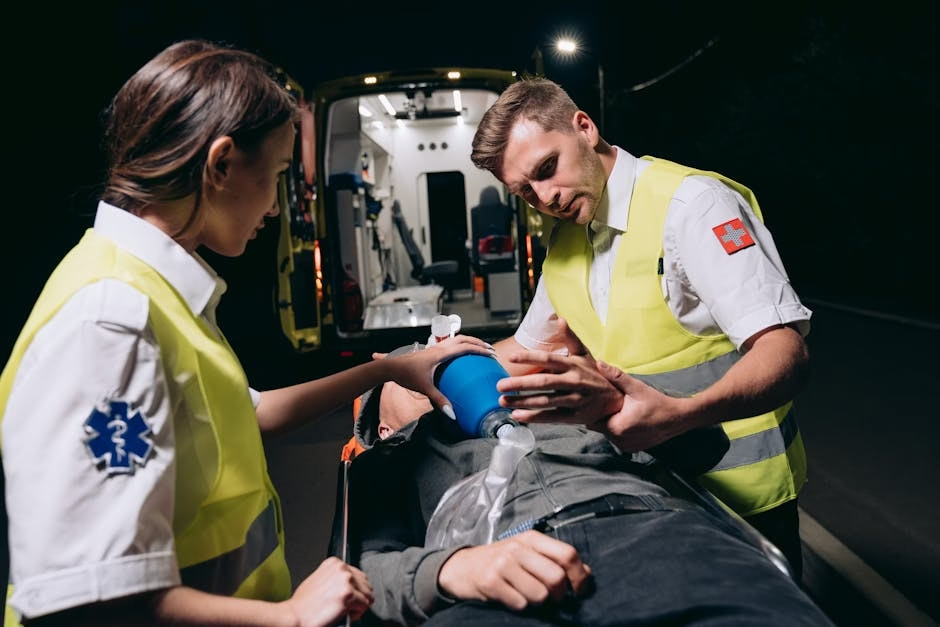
The core of pre-hospital respiratory care is the emergency oxygen protocol. Paramedics are trained to recognize signs of respiratory distress. These include cyanosis, use of accessory muscles, and altered mental status. The protocol mandates immediate oxygen administration for hypoxic patients. Delivery devices range from nasal cannulas for mild cases to non-rebreather masks for severe hypoxia. In critical situations, advanced airway management may be necessary. This includes techniques like bag-valve-mask ventilation. These actions are aligned with international standards from the World Health Organization respiratory health guidelines.
Advanced Dubai Ambulance Services Strategies
Advanced strategies involve sophisticated equipment and specialized training. Critical care paramedics can perform advanced airway procedures. They may use video laryngoscopy for difficult intubations. Moreover, they utilize capnography to monitor end-tidal CO2. This provides crucial data on ventilation effectiveness. For patients with chronic respiratory conditions, knowledge of home respiratory equipment and products is beneficial. This helps in understanding the patient’s baseline status. The service also integrates with community paramedicine programs. These programs proactively manage patients with chronic diseases at home.
Essential Medical Equipment
Ambulances are stocked with comprehensive respiratory equipment. This includes portable oxygen cylinders with various flow regulators. They also carry a range of oxygen delivery devices. For ventilation support, portable ventilators are available. These devices are similar in function to the ResMed Astral 150 ventilator. Additionally, they carry suction units and different types of airways. The equipment is checked and maintained daily. This ensures readiness for any emergency. Paramedics are proficient in using all available tools to stabilize patients effectively.
Dubai Ambulance Services Success Tips
Public awareness is a key success factor. Residents should know the emergency number (998). They must be able to describe the patient’s location and condition clearly. Specifically, they should mention if the patient has known respiratory issues. Furthermore, keeping a list of current medications readily available helps paramedics. For those using home oxygen, having their Inogen One G5 portable oxygen concentrator or other device visible is helpful. Cooperation with paramedics ensures a smooth and efficient transfer of care. This collaboration directly contributes to a positive outcome.
Future of Dubai Ambulance Services
The future is focused on technology and integration. Telemedicine capabilities are being expanded. This allows paramedics to consult with hospital physicians in real-time. Drone delivery of defibrillators or essential medicines is also being explored. Artificial intelligence is being integrated into dispatch systems. This will improve response accuracy and speed. Additionally, there is a continuous update of clinical protocols. These updates are based on the latest evidence and Dubai Health Authority healthcare guidelines. The goal is to create an even more resilient and responsive system.
Frequently Asked Questions
When should I call Dubai Ambulance Services for breathing problems?
Call immediately for severe shortness of breath, blue lips or face, confusion, or inability to speak. These are signs of severe oxygen deprivation requiring emergency Dubai Ambulance Services intervention.
What information should I give the dispatcher?
Provide the exact location, the number of people needing help, and a clear description of the breathing difficulty. Mention if the patient uses home oxygen or a device like a ResMed AirSense 11 CPAP machine.
Is oxygen always administered by ambulance crews?
Oxygen is administered based on clinical assessment and pulse oximetry readings. It is a standard treatment for hypoxia, following strict protocols aligned with UAE Ministry of Health medical standards.
Can I use my personal oxygen concentrator in the ambulance?
Ambulances carry their own medical-grade oxygen systems. Paramedics will typically switch the patient to the ambulance’s supply for consistency and safety during transport, even if they use a ResMed AirMini compact CPAP.
How are chronic respiratory patients managed during transport?
Paramedics obtain a brief history and check for medical alert bracelets. They manage the patient based on their condition, using appropriate oxygen delivery methods like a ResMed AirFit F30i mask if needed, and communicate with the receiving hospital.
Where can I learn more about respiratory health regulations in the UAE?
For official information, refer to the UAE government healthcare regulations and the Health Authority Abu Dhabi regulations. For personal equipment needs, you can always contact our respiratory specialists.
Conclusion
The efficiency of Dubai Ambulance Services is a cornerstone of the city’s healthcare. Their structured approach to emergency oxygen support saves lives every day. These protocols are continuously refined to incorporate the latest medical advancements. Public knowledge and cooperation significantly enhance the system’s effectiveness. Therefore, understanding when and how to call for help is a civic responsibility. Protect your health and that of your loved ones by being informed. For any respiratory health inquiries or equipment needs, do not hesitate to contact our respiratory specialists for expert guidance and support.