

CPAP During MRI Guide – Remove Equipment
Introduction
Looking for sleep apnea solutions? Understanding the critical protocols for CPAP during MRI procedures is essential for patient safety. Consequently, this guide explains the mandatory requirement to remove all CPAP equipment before entering the MRI suite. Magnetic Resonance Imaging uses powerful magnets, which pose severe risks with metallic or electronic devices. Therefore, patients must follow strict safety guidelines established by UAE healthcare authorities.
Adhering to these protocols prevents serious injuries and equipment damage. The UAE’s advanced medical infrastructure, including facilities in Dubai and Abu Dhabi, enforces these standards rigorously. For instance, the Dubai Health Authority healthcare guidelines provide clear directives on medical device safety. Similarly, these measures ensure a safe environment for both patients and healthcare professionals during diagnostic imaging.
At Oxydubai, trusted by 10,000+ UAE patients, we prioritize your safety and education. We provide premium respiratory equipment and products alongside expert guidance on their correct usage in various medical scenarios. This article will detail the reasons behind the removal requirement, outline the risks, and offer practical steps for patients who rely on CPAP therapy.
Need Respiratory Solutions?
Understanding CPAP During MRI
The directive for CPAP during MRI is unequivocal: all equipment must be removed. An MRI scanner generates an incredibly strong magnetic field, typically 1.5 to 3 Tesla. This field is strong enough to pull ferromagnetic objects with tremendous force. Since CPAP machines contain electronic components, motors, and potentially metallic parts, they become dangerous projectiles. Therefore, bringing them into the scan room is strictly prohibited.
Furthermore, the machine’s operation can be disrupted by the magnetic field. This interference can cause permanent damage to the delicate circuitry of your device, such as a ResMed AirSense 11 CPAP machine. Patient safety is the paramount concern for all UAE medical facilities. As a result, they comply with international and local safety standards, including those from the World Health Organization respiratory health guidelines and the UAE Ministry of Health medical standards.
Technologists will always ask you to remove your CPAP machine, mask, tubing, and any portable battery packs. They will provide a secure location to store your equipment during the scan. Importantly, you should inform the radiology staff about your CPAP use during the pre-screening interview. This communication ensures they can guide you through the specific preparation process for CPAP during MRI safely.
Benefits of MRI Safety Compliance
Complying with MRI safety protocols offers immense benefits. Primarily, it prevents catastrophic accidents. A CPAP machine pulled into the MRI bore can cause severe injury to the patient or staff. Additionally, it can damage the multi-million-dirham MRI scanner, leading to significant service disruption. Following the rules ensures a smooth, efficient, and safe diagnostic process for everyone involved.
Moreover, understanding these protocols empowers patients. You can plan accordingly, perhaps by scheduling your MRI at a time when you can manage without your CPAP for the procedure’s duration. For patients using other respiratory aids like an Inogen One G5 portable oxygen concentrator, similar rules apply. These devices also contain electronics and batteries that are incompatible with the MRI environment.
Finally, adherence to these standards upholds the high quality of UAE healthcare. Facilities accredited by the Health Authority Abu Dhabi regulations and other bodies maintain impeccable safety records. By being a informed patient, you contribute to this culture of safety. Consequently, you protect your health, your equipment, and the medical professionals caring for you.
CPAP During MRI Features
When discussing the features of CPAP during MRI, we refer to the specific safety characteristics and protocols, not the device itself. The key feature is its absolute incompatibility with the MRI environment. This incompatibility stems from several inherent design features of all CPAP devices. First, they contain electric motors with magnetic components. Second, they have electronic circuit boards and sensors. Third, many include metal in their chassis or internal structures.
These standard features transform a life-saving device into a significant hazard near an MRI. For example, even a compact travel device like the ResMed AirMini compact CPAP must be left outside. Its small size does not make it safe; its internal components still pose a risk. The powerful magnetic field does not discriminate based on the device’s size or brand.
Another critical “feature” is the established hospital protocol itself. This protocol is a systematic safety checklist. It includes patient screening, secure equipment storage, and sometimes alternative breathing support if medically necessary during the scan. Understanding these procedural features helps patients feel more prepared and less anxious. Therefore, always disclose your full medical device history to the MRI team for a safe experience.
Safety Protocol Specifications
The safety protocol specifications for an MRI with a CPAP user are detailed and non-negotiable. Initially, a thorough pre-screening is conducted by a trained technologist. This screening involves a questionnaire about implants and medical devices. You must declare your CPAP use here. Subsequently, you will receive explicit instructions to remove the device, mask, and all accessories.
Typically, you will be directed to a secure locker room outside the MRI controlled area. Here, you can store your CPAP equipment safely. The specifications often require that you bring your equipment with you to the facility, rather than leaving it in a car, to keep it in a climate-controlled environment. For patients on life-support ventilators like the ResMed Astral 150 ventilator, the hospital must make advanced arrangements for MRI-compatible ventilation, which is a highly specialized procedure.
These specifications are enforced under UAE government healthcare regulations. The goal is to eliminate all ferromagnetic materials from Zone IV (the scanner room). Compliance ensures the magnetic field’s integrity for a clear image and guarantees physical safety. Consequently, these strict specifications are in your best interest and are applied consistently across all reputable imaging centers in the Emirates.
Expert Medical Advice?
Setup & Maintenance Reminders
While you cannot set up your CPAP during an MRI, proper setup and maintenance beforehand ensure you can comfortably resume therapy after the scan. Before your appointment, check that your device is clean and functioning. Ensure your mask, such as the ResMed AirFit F30i mask, has a good seal and that all tubing is intact. This preparation allows for a smooth transition back to therapy once you leave the imaging facility.
Maintenance is also crucial for overall device longevity and health. Regularly clean your equipment as per the manufacturer’s instructions. Furthermore, schedule periodic check-ups for your device. If you have concerns about going without your CPAP for the MRI duration, discuss this with your sleep specialist or pulmonologist in advance. They can provide personalized advice based on your medical condition.
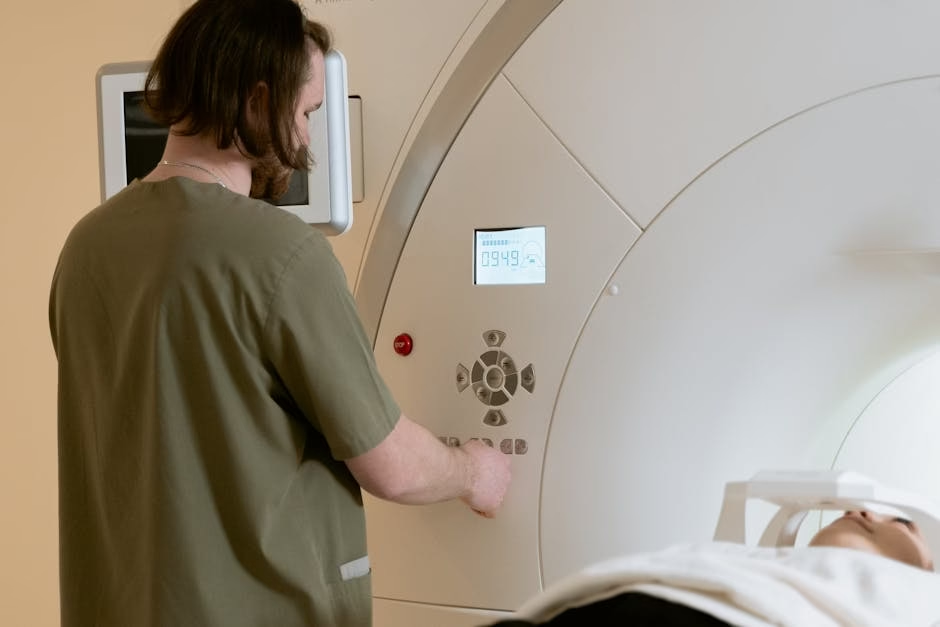
After the MRI, you can simply reconnect your CPAP as usual. There is no special procedure required post-scan, as your device was not exposed to the magnetic field. However, always handle your equipment with care when transporting it to and from medical appointments. Using a dedicated carrying case protects your investment and ensures it remains hygienic and ready for use when you need it most.
CPAP During MRI Advantages
Recognizing the advantages of strict CPAP during MRI policies reinforces their importance. The primary advantage is unparalleled patient safety. By removing the risk of projectile injury, patients can undergo necessary diagnostic imaging with peace of mind. Another advantage is the protection of your valuable medical equipment. Replacing a damaged CPAP machine is costly and disrupts your essential therapy.
Additionally, these policies advantage the healthcare system by preventing costly scanner damage and downtime. This efficiency benefits all patients by keeping imaging services available and operational. Adherence to these protocols also streamlines the process. When patients are informed and compliant, the MRI procedure can proceed on schedule without delays for safety clarifications or incidents.
Ultimately, the greatest advantage is the successful completion of your diagnostic scan. An MRI provides critical information for your doctors. Following the CPAP during MRI rule ensures this vital tool can be used safely and effectively for your benefit. Therefore, viewing this requirement as a protective advantage, rather than an inconvenience, is key to a positive healthcare experience.
Common Questions Answered
Patients often have questions about this process. A frequent one is: “Can I use a plastic or MRI-safe CPAP?” Currently, there are no commercially available CPAP machines designed to be MRI-safe or MRI-compatible due to their essential electronic components. The motor and control systems cannot function in or near the strong magnetic field. Thus, all CPAP equipment must be removed.
Another common question concerns sleep apnea management during the scan. Most MRI scans are relatively short (30-60 minutes). For many patients, being awake and upright during this time is manageable without their CPAP. However, if you have severe respiratory issues, your doctor and the radiologist can discuss potential solutions or monitoring strategies beforehand. Always communicate your concerns during the pre-screening.
People also ask if masks contain metal. While most modern CPAP masks use minimal metal, some may have small magnetic clips or metallic parts for headgear adjustment. These pose the same projectile risk. Therefore, the entire system—machine, humidifier, tube, and mask—must remain outside the MRI room. For further clarification on equipment specifics, you can always contact our respiratory specialists.
Expert Recommendations
Medical experts offer clear recommendations for CPAP users needing an MRI. First, always inform the imaging center and your referring physician about your CPAP use when scheduling the appointment. This early disclosure allows for proper planning. Second, bring your equipment with you in its case. Do not assume the hospital will provide storage; come prepared to secure your device in their designated area.
Experts also recommend discussing any anxiety about breathing without your CPAP with your sleep therapist. They can offer reassurance or techniques for short-term management. Furthermore, if you use other medical devices, such as an oxygen concentrator, disclose these as well. The safety principles are similar for all electronic medical equipment in the MRI suite.
Finally, follow all instructions given by the MRI technologists without exception. They are trained specialists in MRI safety. Their primary goal is your well-being. By partnering with them and following these expert recommendations, you ensure a safe, efficient, and successful imaging procedure. Afterwards, you can immediately return to using your CPAP therapy without any interruption to your long-term health management.
Frequently Asked Questions (FAQ)
1. Why can’t I bring my CPAP machine into the MRI room?
MRI scanners use powerful magnets. The CPAP machine contains metal and electronics that can be violently pulled into the magnet, causing severe injury and damage.
2. What should I do with my CPAP during the MRI?
You will be asked to remove it and store it in a secure locker or room outside the MRI controlled access area before your scan.
3. Is it safe to go without my CPAP for the MRI duration?
For most patients, the 30-60 minute period while awake is manageable. Discuss any severe breathing concerns with your doctor beforehand.
4. Does the rule for CPAP during MRI apply to all types?
Yes. All CPAP, APAP, and BiPAP machines, regardless of brand or size, must be removed due to their internal components.
5. What about my CPAP mask and tubing?
All parts of the system, including the mask and tube, must also be left outside the MRI room as they may contain small metal parts.
6. Who can I contact for more advice on managing my respiratory equipment for medical tests?
You can contact our respiratory specialists at Oxydubai for personalized guidance on your equipment and medical procedures.
Conclusion
In conclusion, the mandate to remove CPAP during MRI procedures is a non-negotiable safety standard. It protects you, healthcare workers, and expensive medical equipment. The powerful magnetic field of an MRI scanner is incompatible with the electronic and metallic components found in all CPAP machines and their accessories. Understanding and complying with this rule is a critical part of being a prepared patient in the UAE’s advanced healthcare system.
By following the pre-screening protocols, storing your equipment securely, and communicating openly with your medical team, you contribute to a safe environment. Remember, this requirement applies to all respiratory devices, from standard CPAPs to portable concentrators. For continued support and access to high-quality respiratory equipment and products, trusted providers like Oxydubai are here to help you navigate both therapy and necessary medical procedures safely and confidently.
Ultimately, the temporary removal of your CPAP enables a vital diagnostic tool to work effectively. This collaboration between patient safety protocols and advanced imaging technology exemplifies the high standard of care in the UAE. Therefore, always prioritize these guidelines for a successful and secure healthcare experience.