

Cloud CPAP Monitoring Privacy UAE 2025 – Complete Guide
Looking for sleep apnea solutions? The rise of Cloud CPAP Monitoring Privacy UAE 2025 brings critical questions. Connected medical devices offer unparalleled therapy management. However, they also introduce significant data security considerations. The UAE’s advanced healthcare landscape, particularly in Dubai, is rapidly adopting this technology. Consequently, patients and providers must understand the privacy implications.
Modern CPAP machines transmit sleep data to the cloud. This data includes usage hours, apnea events, and mask fit scores. Therefore, protecting this sensitive health information is paramount. The UAE has robust digital transformation goals for 2025. Simultaneously, it enforces strict data protection laws. Patients using devices like the ResMed AirSense 11 CPAP machine benefit from remote monitoring. Yet, they must be aware of their digital rights.
At Oxydubai, trusted by 10,000+ UAE patients, we provide premium respiratory equipment and products. We also prioritize patient education on data security. This guide explores the privacy landscape for cloud-based CPAP monitoring in the UAE. It will cover regulations, risks, and practical safeguards for 2025 and beyond.
Need Respiratory Solutions?
Understanding Cloud CPAP Monitoring Privacy UAE 2025
Cloud CPAP Monitoring Privacy UAE 2025 refers to the evolving framework for protecting patient data. Connected CPAP devices collect and transmit health information. This process is essential for personalized therapy adjustments. However, it creates a data trail that requires robust security. The UAE’s vision for a smart healthcare ecosystem is clear. Accordingly, the government is strengthening cyber laws to match this ambition.
Key entities like the Dubai Health Authority healthcare guidelines set the standard. They mandate high levels of data protection for medical devices. For instance, data encryption during transmission and storage is non-negotiable. Patients using a ResMed AirMini compact CPAP should inquire about these protocols. Ultimately, understanding these principles is the first step toward secure therapy.
Furthermore, the concept involves patient consent and data ownership. Users must know what data is collected and who can access it. Providers must transparently explain these details. This understanding empowers patients to make informed choices. It also aligns with global best practices outlined by the World Health Organization respiratory health guidelines on digital health ethics.
Benefits of Connected Sleep Therapy
Remote monitoring offers transformative advantages for sleep apnea management. Firstly, it enables clinicians to track compliance and efficacy in real-time. This proactive approach often leads to better therapy outcomes. For example, a doctor can spot a leak issue with an ResMed AirFit F30i mask and advise promptly. Consequently, patient frustration decreases and adherence improves.
Secondly, it reduces the need for frequent in-person clinic visits. This is a significant convenience in a bustling city like Dubai. Patients can receive care and adjustments virtually. Moreover, data trends help personalize pressure settings and comfort features. This personalized care is a hallmark of modern respiratory medicine. Additionally, family members or caregivers can be reassured by visible therapy data.
Finally, aggregated anonymized data helps advance public health research. It can identify patterns in sleep apnea prevalence and treatment responses across the UAE. However, this must always be done within strict ethical and UAE government healthcare regulations. The benefits are substantial, but they must be balanced with unwavering commitment to privacy.
Cloud CPAP Monitoring Privacy UAE 2025 Features
The technical features ensuring Cloud CPAP Monitoring Privacy UAE 2025 are multifaceted. A core feature is end-to-end encryption. This security measure scrambles data from the device to the cloud server. Even if intercepted, the information remains unreadable. Leading devices, such as the ResMed AirSense 11, incorporate this technology. Similarly, secure user authentication prevents unauthorized access to patient portals.
Another critical feature is data minimization. Devices should only collect information necessary for therapy optimization. Furthermore, patients should have control over data sharing preferences. They should be able to grant or revoke access to clinicians or family members. Regular security audits and software updates are also essential features. These updates patch vulnerabilities that hackers could exploit.
Compliance features with local laws are paramount. Systems must be configured to adhere to the UAE Ministry of Health medical standards and federal data protection regulations. This includes rules about data storage location and breach notification procedures. When choosing a device, verifying these built-in privacy features is as important as evaluating its therapeutic performance.
Connected Device Specifications
When selecting a connected CPAP machine, review its security specifications diligently. Look for certifications indicating compliance with international cybersecurity standards. Check the type of wireless connectivity used, such as cellular or Wi-Fi. Each has different security implications. For instance, cellular networks often have built-in encryption. Additionally, examine the manufacturer’s privacy policy. Understand where the data servers are physically located.
Specifications should also detail user access controls. Multi-factor authentication adds a vital layer of security. Moreover, check if the device allows for local data storage as an option. Some patients may prefer to keep data offline initially. The Inogen One G5 portable oxygen concentrator, while for oxygen therapy, exemplifies how modern medical devices integrate connectivity with robust design.
Finally, consider the device’s update mechanism. Secure, over-the-air updates are necessary to address emerging threats. Manufacturers should have a clear policy for supporting devices with security patches for their entire lifespan. These technical specs form the foundation of trust in connected therapy. They ensure that the benefits of monitoring do not come at the cost of personal privacy.
Expert Medical Advice?
Setup and Maintenance for Security
Proper setup is the first practical step toward securing your CPAP data. Always change default passwords on device accounts to strong, unique alternatives. Use the manufacturer’s official app and avoid third-party software. When connecting to home Wi-Fi, ensure your router uses WPA2 or WPA3 encryption. Furthermore, keep the device’s firmware updated. Manufacturers release updates to fix security flaws.
Routine maintenance involves digital hygiene. Regularly review which devices or accounts are linked to your CPAP data. Log out of shared computers after checking your therapy progress. Be cautious of phishing emails pretending to be from your device provider or clinic. Reputable providers like Oxydubai will never ask for sensitive login details via email. For technical support on devices like the ResMed Astral 150 ventilator, always use official channels.
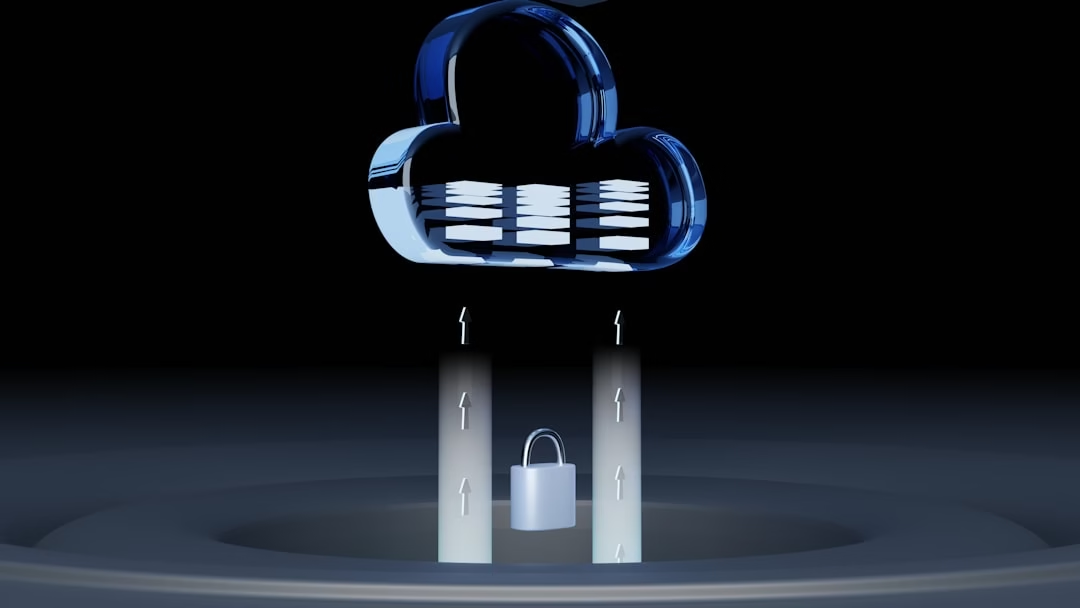
Additionally, understand the data retention policies. Ask your provider how long your data is stored and how it is anonymized or deleted after therapy ends. This proactive management, aligned with Health Authority Abu Dhabi regulations, puts you in control. Security is not a one-time action but an ongoing practice integrated into your therapy routine.
Cloud CPAP Monitoring Privacy UAE 2025 Advantages
Embracing the Cloud CPAP Monitoring Privacy UAE 2025 standards offers distinct advantages. Primarily, it builds patient trust in digital health solutions. When users feel their data is safe, they are more likely to engage fully with remote care. This leads to higher treatment adherence and better health outcomes. For the healthcare system, robust privacy reduces legal and reputational risks associated with data breaches.
Another advantage is the attraction of international investment and innovation. Dubai positions itself as a hub for secure health tech. Strong privacy frameworks make it an attractive market for leading manufacturers. Consequently, UAE patients get earlier access to advanced, secure devices. This ecosystem ensures that products available, from our respiratory equipment and products range, meet the highest global security benchmarks.
Finally, it creates a culture of data responsibility. Patients become informed participants in their care. Healthcare providers prioritize security by design. Regulators have clear frameworks to enforce. This collective advantage fosters a sustainable and secure digital health environment. It turns privacy from a concern into a competitive strength for the UAE’s healthcare sector.
Common Questions on Data Security
Patients often have specific concerns about their CPAP data. A frequent question is: “Who owns my sleep data?” Typically, you own your health information, but you grant the provider a license to use it for your care. Always review the terms of service. Another common query is about government access. Data can only be accessed by authorities under specific legal circumstances, as per UAE law.
People also ask, “Can hackers blackmail me with my CPAP data?” While any connected device carries a risk, robustly encrypted health data has low blackmail value compared to financial information. The greater risk is often insurance-related discrimination, which UAE laws generally prohibit. Patients wonder if they can opt out of cloud monitoring. Often, you can use the device in non-connected mode, but this forfeits remote support benefits.
Finally, many ask how to verify a provider’s security credentials. Look for compliance certifications and ask direct questions about encryption and data handling. A trustworthy provider will be transparent. For any lingering concerns, contact our respiratory specialists. We can explain the security measures in place for every product we supply.
Expert Recommendations for 2025
As we approach 2025, experts recommend a proactive stance. First, advocate for your privacy rights. Ask your sleep clinic about their data security policies before starting therapy. Second, choose devices from manufacturers with a public commitment to security and regular audits. Prioritize brands that design with privacy as a core feature, not an afterthought.
Experts also recommend supporting regulatory evolution. Engage with public consultations on digital health laws if possible. Furthermore, consider using a Virtual Private Network (VPN) for an added layer of security on home networks, especially in apartments or shared spaces. However, ensure it does not interfere with the device’s connectivity. For complex needs, such as those requiring a ventilator, ensure the device meets the highest standards, like the ResMed Astral 150.
Lastly, stay informed. The landscape of Cloud CPAP Monitoring Privacy UAE 2025 will continue to evolve. Follow updates from the Dubai Health Authority and other bodies. By taking these steps, you secure not just your data, but also the uninterrupted, effective therapy you deserve.
Frequently Asked Questions (FAQ)
Q1: Is my CPAP data safe from being sold to third parties in the UAE?
Under UAE regulations, your explicit consent is typically required for sharing health data for commercial purposes. Reputable providers and manufacturers do not sell personal health data.
Q2: What happens to my data if I stop using my CPAP machine?
Data retention policies vary. You should ask your provider about their data deletion process upon therapy conclusion. Many anonymize data for research after a period.
Q3: Can I access and download my own raw CPAP data?
Yes, most platforms allow patients to export their own therapy data for personal records or second opinions. This is part of data ownership rights.
Q4: How does Cloud CPAP Monitoring Privacy UAE 2025 affect insurance claims?
Insurance companies may require compliance data, but access should be governed by your consent and strict regulations. They cannot arbitrarily access your full data stream.
Q5: Are portable CPAP machines like the AirMini less secure?
No, portable devices like the ResMed AirMini use the same secure cloud infrastructure and encryption standards as home units. Security is based on software, not size.
Q6: What should I do if I suspect a data privacy breach?
Immediately report your concerns to your healthcare provider and the device manufacturer. You can also contact the UAE’s relevant data protection authority for guidance.
Conclusion
The integration of cloud monitoring into sleep apnea therapy is irreversible and largely beneficial. For UAE patients in 2025, the key is informed engagement. Understanding the principles of Cloud CPAP Monitoring Privacy UAE 2025 allows you to reap the rewards of connected care while mitigating risks. The regulatory environment in Dubai and the wider UAE is evolving to provide strong protections.
By choosing secure devices from reputable suppliers, practicing good digital hygiene, and asking the right questions, you take control. Your health data is a valuable asset that deserves robust protection. The future of respiratory care is personalized, remote, and data-driven. With the right precautions, it can also be private and secure.
At Oxydubai, we are committed to providing not only the best respiratory equipment and products but also the knowledge to use them safely in our connected world. For personalized advice on choosing a secure CPAP device, contact our respiratory specialists today.

