

Altitude Affects CPAP Oxygen Therapy – Complete Guide
Looking for sleep apnea solutions? Understanding how altitude affects CPAP and oxygen therapy is crucial for effective treatment. Higher altitudes present unique challenges for respiratory therapy. Consequently, patients and caregivers must adapt their equipment and approach. This is especially relevant in regions with varying elevations. For instance, travel to mountainous areas can disrupt therapy. Therefore, proper preparation ensures continuous care and safety.
At higher elevations, air pressure and oxygen density decrease significantly. This change directly impacts machines like CPAP and oxygen concentrators. As a result, therapy may become less effective without adjustments. Moreover, underlying conditions like sleep apnea can worsen. Thankfully, modern devices feature altitude compensation technology. However, users must understand how to utilize these features correctly.
In the UAE, patients may travel from sea level to higher terrain. Thus, managing respiratory conditions requires specific knowledge. At Oxydubai, we are trusted by 10,000+ UAE patients. We provide premium respiratory equipment and products designed for diverse environments. Our experts guide you through altitude-related adjustments for optimal health.
Need Respiratory Solutions?
Understanding Altitude Affects CPAP Oxygen Therapy
Altitude fundamentally changes the air we breathe. Specifically, barometric pressure drops as elevation increases. This means each breath contains fewer oxygen molecules. For healthy individuals, the body compensates by breathing faster. However, for those on respiratory therapy, the challenge is greater. Devices must work harder to deliver the prescribed air pressure and oxygen concentration.
CPAP machines maintain open airways with continuous air pressure. At altitude, the machine’s motor must spin faster to generate the same pressure. Similarly, portable oxygen concentrators (POCs) separate oxygen from thin air. Their efficiency can drop if not designed for high elevation. Therefore, selecting the right equipment is the first critical step. For example, the BMC Resmart G2S A20 Auto CPAP machine features automatic altitude compensation.
Understanding this science is key to safe therapy. The World Health Organization respiratory health guidelines note the impacts of environmental factors on chronic conditions. Consequently, patients should consult healthcare providers before traveling. Proactive planning prevents therapy disruption and health risks.
Benefits of High-Altitude Respiratory Treatment
Properly managed therapy at altitude offers significant benefits. First, it maintains treatment efficacy during travel or residence in high areas. This ensures uninterrupted management of sleep apnea and COPD. Furthermore, it prevents dangerous drops in blood oxygen levels (hypoxemia). As a result, patients avoid symptoms like severe headaches, fatigue, and confusion.
Secondly, modern adaptive devices improve quality of life. They allow patients to explore high-altitude destinations confidently. For instance, a reliable portable oxygen concentrator enables active lifestyles. The Inogen One G5 portable oxygen concentrator is rated for use up to 13,123 feet. This empowers users with freedom and mobility.
Finally, optimized therapy reduces long-term health risks. Consistently effective treatment lowers strain on the heart and lungs. Compliance with UAE Ministry of Health medical standards for device use is easier. Therefore, patients enjoy better overall health outcomes and peace of mind.
Altitude Affects CPAP Oxygen Therapy Features
Key features in modern devices address altitude challenges. Primarily, look for automatic altitude compensation. This feature allows machines to self-adjust to elevation changes. For example, the Philips Respironics DreamStation Auto CPAP adjusts up to 8,500 feet. Consequently, users receive consistent therapy without manual settings.
Another crucial feature is robust motor performance. Devices need powerful motors to compensate for low atmospheric pressure. Additionally, accurate oxygen sensing technology is vital for concentrators. It ensures the delivered oxygen percentage remains stable. Data tracking is also beneficial. It lets users and doctors review therapy effectiveness at different elevations.
Humidification integration is equally important. Altitude often brings drier air, which can irritate airways. Integrated heated humidifiers, as seen in many CPAP models, combat this. They improve comfort and compliance. Always verify device specifications against your maximum travel altitude. Adherence to Dubai Health Authority healthcare guidelines on medical device use is essential.
Therapy Device Technical Specifications
Reviewing technical specs ensures your device suits high-altitude use. Check the maximum operating altitude rating. Most quality CPAP machines function up to 8,200-9,840 feet. Advanced models and ventilators, like the Philips DreamStation Auto BiPAP machine, support even higher ranges. Similarly, verify the oxygen concentrator’s flow rate stability at elevation.
Power requirements are another specification. Note that devices may consume more power at altitude. This impacts battery life for portable units. Therefore, plan for extra battery capacity during travel. Also, consider the device’s weight and portability. Easy transport is key for mobile patients.
Noise level specifications matter for comfort. However, remember that motor noise might increase at high elevation. This is due to the higher workload. Always consult the manufacturer’s altitude performance charts. For complex needs, devices like the Philips DreamStation BiPAP ST machine offer sophisticated pressure support. Compliance with Health Authority Abu Dhabi regulations ensures device safety and efficacy.
Expert Medical Advice?
Setup and Maintenance for High Elevation
Correct setup is vital for altitude therapy. First, allow your device to acclimatize. Turn it on at the new elevation and let it run for 20-30 minutes. This allows its sensors to calibrate. Next, verify the pressure or oxygen output. Many auto-adjusting devices do this automatically. However, always double-check with an external pulse oximeter.
Maintenance becomes more critical in dry, high-altitude air. Clean filters more frequently because the machine works harder. Similarly, check tubing and masks for leaks more often. Dry air can cause cracks. Using a compatible humidifier, like those integrated into advanced CPAPs, is highly recommended. For mask comfort, the ResMed AirFit F30i full face mask provides a secure seal.
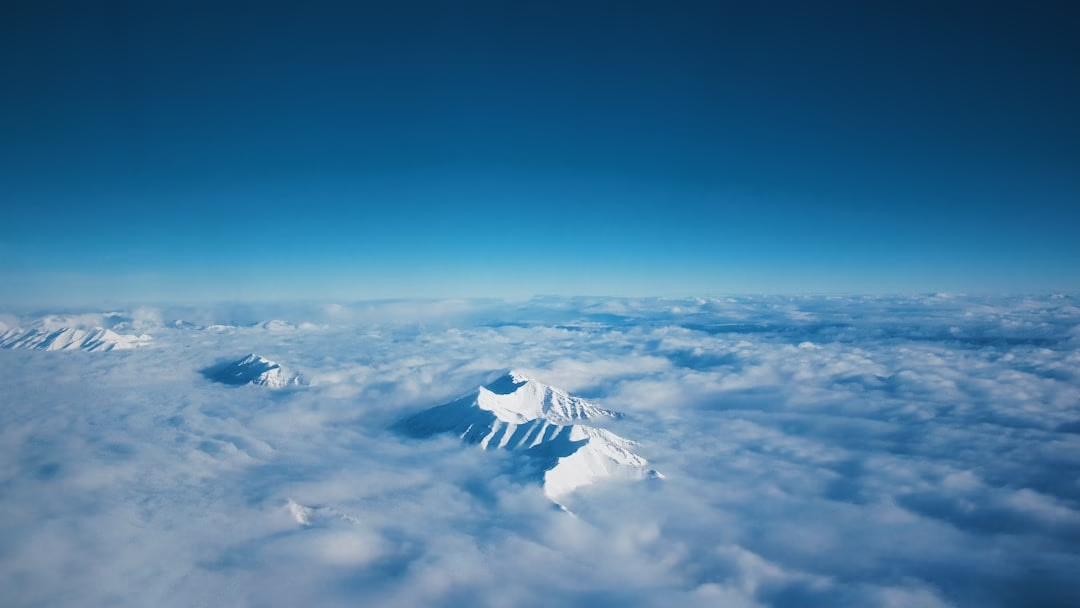
Regularly update your device software if applicable. Manufacturers often improve altitude algorithms. Keep a log of your settings and oxygen saturation at different locations. This data is invaluable for your doctor. Finally, ensure you have a backup power plan. Sudden therapy interruption at altitude can be risky.
Altitude Affects CPAP Oxygen Therapy Advantages
Recognizing and adapting to how altitude affects CPAP and oxygen therapy offers clear advantages. The primary advantage is safety. Properly adjusted therapy prevents hypoxemia and its complications. Moreover, it ensures therapeutic consistency, whether you are in Dubai or the Hajar Mountains.
Another advantage is device longevity. Operating a machine within its specified altitude range prevents undue strain. This protects your investment. Furthermore, patient confidence soars. Knowing your equipment is optimized allows for stress-free travel and daily life. For those requiring advanced ventilation, the BMC BPAP G2S B25VT/B30VT ventilator provides reliable high-altitude performance.
Ultimately, these advantages lead to better health management. They support adherence to treatment plans. This aligns with broader UAE government healthcare regulations promoting patient well-being. Therefore, understanding these principles is not just technical—it’s essential for quality of life.
Common High-Altitude Therapy Questions
Patients often have questions about therapy at elevation. A common question is: “Will my current device work at high altitude?” The answer depends on its specifications. Check the user manual or consult your supplier. Many modern devices will work but may require verification.
Another frequent query concerns battery life. Yes, battery drain is typically faster. Plan for at least 20-30% reduced battery duration. “Do I need a prescription setting change?” Possibly. Your doctor might recommend a temporary pressure or flow increase. Always consult them before altering prescribed settings.
People also ask about airplane travel. Remember, aircraft cabins are pressurized to around 6,000-8,000 feet. Therefore, you must use your device with a suitable FAA-approved power source. Never use it during take-off or landing unless instructed by crew. For all queries, contact our respiratory specialists for personalized advice.
Expert Recommendations for Reliable Therapy
Experts recommend proactive steps for altitude therapy. First, schedule a pre-travel consultation with your pulmonologist. Discuss your itinerary and get clinical guidance. Second, rent or purchase an altitude-compatible device if yours is not suitable. Oxydubai offers a range of respiratory equipment and products for this purpose.
Invest in a high-quality pulse oximeter. Monitor your blood oxygen saturation, especially during the first few days at a new elevation. This provides real-time feedback on therapy effectiveness. Additionally, stay well-hydrated. Dry air accelerates fluid loss, thickening mucus and affecting airways.
Finally, choose equipment from reputable brands with proven altitude performance. Read independent reviews and clinical reports. Ensure your device supplier offers strong after-sales support. This is crucial for troubleshooting in remote locations. Following these expert tips guarantees that your respiratory therapy remains effective and safe, anywhere.
Frequently Asked Questions (FAQ)
Q1: How does altitude specifically affect CPAP therapy?
Altitude lowers air density, so CPAP motors work harder to deliver the set pressure. Auto-adjusting models compensate for this automatically.
Q2: Can I use my portable oxygen concentrator in the mountains?
Yes, if it’s rated for high altitude. Check its maximum operating elevation in the manual.
Q3: Do I need to change my CPAP pressure settings at altitude?
Auto CPAPs adjust themselves. Fixed-pressure CPAPs may need a clinician’s adjustment based on oximetry data.
Q4: Is humidity more important at high altitude?
Yes. Air is drier, increasing airway irritation. Using a heated humidifier with your CPAP is highly recommended.
Q5: What are the signs my therapy isn’t working at altitude?
Morning headaches, extreme fatigue, and shortness of breath indicate poor therapy. Check your equipment and use a pulse oximeter.
Q6: Where can I learn more about how altitude affects CPAP and oxygen therapy?
Consult your healthcare provider and trusted medical suppliers. For specialized equipment in the UAE, explore our guide and product range.
Conclusion
In summary, altitude significantly impacts respiratory therapy. Understanding how altitude affects CPAP and oxygen therapy is essential for patients and caregivers. Proper device selection, setup, and maintenance are non-negotiable. These steps ensure treatment remains effective and safe. Consequently, they protect your health during travel or residence at high elevations.
Always prioritize equipment with automatic altitude compensation. Furthermore, consult medical professionals before changing your routine. In the UAE, patients have access to advanced technology and expert support. Oxydubai is committed to providing solutions for every environment. We help you breathe easier, no matter the elevation.
Take control of your respiratory health today. For personalized advice and premium equipment, contact our respiratory specialists. Let us help you adapt your therapy for any altitude, ensuring peace of mind and optimal well-being.

