

3D Printing Medical Equipment Customization – Complete Guide
Introduction
Managing respiratory conditions in UAE? The landscape of patient care is undergoing a revolutionary transformation. This change is driven by 3D printing medical equipment customization. This technology enables unprecedented personalization and accessibility. Consequently, patients receive devices tailored precisely to their unique anatomical needs.
In the UAE’s advanced healthcare ecosystem, this innovation is particularly impactful. For instance, custom-fitted CPAP masks and patient-specific surgical guides are becoming standard. These advancements lead to improved treatment adherence and superior clinical outcomes. The World Health Organization respiratory health guidelines emphasize the importance of such patient-centered technologies.
At Oxydubai, we are at the forefront of this medical revolution. Trusted by 10,000+ UAE patients, we provide premium respiratory equipment and products. Our commitment is to integrate these cutting-edge solutions for enhanced patient well-being across the Emirates.
Need Respiratory Solutions?
Understanding 3D Printing Medical Equipment Customization
3D printing medical equipment customization represents a paradigm shift in healthcare manufacturing. Fundamentally, it involves creating three-dimensional objects from digital files. These objects are built layer by layer using various materials. This process allows for the production of highly personalized medical devices.
In respiratory care, this technology enables perfect-fitting interfaces. For example, a ResMed AirFit F30i mask can be digitally scanned and modified for an optimal seal. This customization drastically improves comfort and therapy efficacy. Moreover, it reduces the common issue of air leaks.
The UAE’s regulatory framework supports such innovations. The UAE Ministry of Health medical standards ensure these customized devices meet stringent safety requirements. Therefore, patients can confidently adopt these advanced solutions for their respiratory needs.
Benefits of Additive Manufacturing in Healthcare
The advantages of this technology are profound and multi-faceted. Firstly, patient-specific devices dramatically improve treatment compliance. When a device fits perfectly, patients are more likely to use it consistently. This is crucial for chronic conditions like sleep apnea.
Secondly, additive manufacturing enables rapid prototyping and production. Hospitals can create surgical guides or anatomical models in hours. This speed can be critical for complex procedures. Furthermore, it allows for iterative design improvements based on real-time feedback.
Another significant benefit is supply chain resilience. Local production of medical devices reduces import dependencies. This is strategically important for the UAE’s healthcare security. The UAE government healthcare regulations actively encourage such technological sovereignty in medical supplies.
3D Printing Medical Equipment Customization Features
The core features of this technology make it uniquely suited for medical applications. Anatomical modeling is a primary feature. Using patient scan data, clinicians can create precise replicas of airways or other structures. These models are invaluable for surgical planning and education.
Another critical feature is material versatility. Medical-grade silicones, thermoplastics, and even metals can be used. For instance, the lightweight components in an Inogen One G5 portable oxygen concentrator could be custom-printed for enhanced portability. This adaptability opens endless possibilities for device optimization.
Digital inventory is a revolutionary feature. Instead of storing physical devices, hospitals can keep digital files. These files are printed on-demand when needed. This approach significantly reduces storage costs and waste. It aligns with the Dubai Health Authority healthcare guidelines for efficient and sustainable medical practices.
Advanced Manufacturing Specifications
The technical specifications of medical 3D printing ensure reliability and safety. Layer resolution is typically between 16-200 microns. This precision allows for smooth surfaces and intricate details. Such accuracy is essential for devices that contact sensitive tissues.
Biocompatibility is a non-negotiable specification. All materials must meet international standards for skin contact and sterilization. For example, resins used for dental appliances or mask components undergo rigorous testing. Similarly, the materials in a ResMed Astral 150 ventilator interface must maintain integrity under constant use.
Mechanical properties are carefully controlled. Printed parts must withstand cleaning, assembly, and daily use. Tensile strength, flexibility, and durability are precisely engineered. These specifications are verified against the Health Authority Abu Dhabi regulations to ensure patient safety across the Emirates.
Expert Medical Advice?
Setup and Maintenance Protocols
Implementing this technology requires careful planning. Firstly, the digital workflow must be established. This process involves scanning, design, printing, and post-processing. Each step requires specialized equipment and trained personnel. Consequently, proper training is essential for success.
Maintenance of 3D printing equipment follows strict schedules. Regular calibration ensures consistent print quality. Nozzle cleaning and build plate leveling are routine tasks. Similarly, the printed medical devices themselves require proper care. For example, a customized mask from a ResMed AirMini compact CPAP needs regular cleaning and inspection.
Quality control is continuous throughout the process. Printed parts are measured against digital specifications. Additionally, they undergo functional testing before patient use. This rigorous approach ensures every customized device performs as intended. It mirrors the quality standards of traditionally manufactured medical equipment.
3D Printing Medical Equipment Customization Advantages
The advantages of this approach are transforming patient care across the UAE. Cost reduction is a significant benefit. Traditional manufacturing often involves expensive molds and tooling. Conversely, 3D printing eliminates these upfront costs. This makes custom devices more accessible to patients.
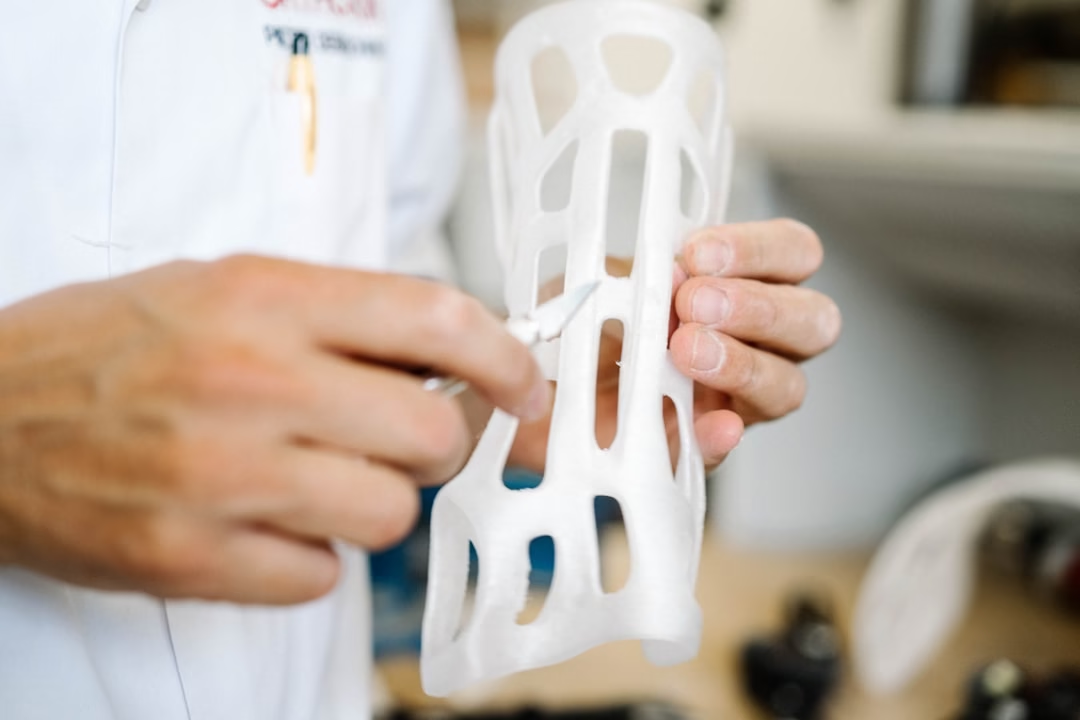
Speed of production is another major advantage. A custom device can be designed and printed within days. This rapid turnaround is crucial for patients needing immediate solutions. For instance, a perfectly fitted interface for a ResMed AirSense 11 CPAP machine can be produced quickly to resolve comfort issues.
Finally, the ability to create complex geometries is unparalleled. Traditional manufacturing cannot easily produce the intricate, organic shapes of human anatomy. 3D printing excels at this. Therefore, devices can match anatomical contours with unprecedented precision. This results in better sealing, comfort, and overall therapy effectiveness.
Common Questions About Medical 3D Printing
How accurate are 3D printed medical devices? They are extremely accurate, typically within 0.1-0.2 millimeters of the digital design. This precision ensures perfect fit and function.
Are the materials safe for medical use? Absolutely. All materials are medical-grade and biocompatible. They meet international standards for safety and performance.
What is the typical production time? From scan to finished device, the process usually takes 2-5 days. However, this can vary based on complexity.
Can 3D printing reduce equipment costs? Yes, significantly. It eliminates mold costs and reduces material waste. Consequently, custom devices become more affordable.
Is 3D printing medical equipment customization available in Dubai? Yes, leading providers like Oxydubai are integrating this technology. It is transforming respiratory care across the UAE.
How durable are these customized devices? They are designed for daily medical use. With proper care, they last as long as traditional devices.
Expert Recommendations for Implementation
Successful implementation requires a strategic approach. Firstly, start with less critical applications. Custom mask interfaces or surgical guides are excellent starting points. These applications demonstrate value without excessive risk.
Secondly, invest in proper training. The technology is only as good as the operators. Comprehensive training ensures optimal results. Additionally, it builds confidence among medical staff and patients.
Finally, establish clear quality control protocols. Every printed device must meet stringent standards. Regular audits and testing maintain consistency and safety. For personalized advice on integrating these solutions, contact our respiratory specialists. Our team can guide you through the entire process.
Frequently Asked Questions
What conditions benefit most from customized devices? Complex anatomical cases see the greatest improvement. Patients with facial irregularities or unique features benefit dramatically.
How does customization improve sleep apnea treatment? Better mask fit reduces leaks and discomfort. This leads to higher therapy usage and improved outcomes.
Are there limitations to what can be 3D printed? Size is the primary limitation. Most medical printers have build volumes suitable for personal devices, not large equipment.
What about sterilization of 3D printed parts? They withstand standard sterilization methods. However, material selection is crucial for compatibility with cleaning protocols.
Can existing devices be modified using 3D printing? Yes, accessories and interfaces can be created. These enhance comfort and functionality of standard equipment.
How does 3D printing medical equipment customization impact patient satisfaction? It significantly increases satisfaction. Patients appreciate devices designed specifically for their needs and anatomy.
Conclusion
The integration of 3D printing into medical device manufacturing is not merely an innovation; it is a fundamental improvement in patient care. This technology enables solutions that were previously impossible or prohibitively expensive. Across the UAE, healthcare providers are recognizing its transformative potential.
From custom respiratory masks to patient-specific surgical tools, the applications continue to expand. The benefits of improved comfort, better compliance, and reduced costs are undeniable. Furthermore, as the technology advances, its capabilities will only grow.
The future of 3D printing medical equipment customization is exceptionally promising. It represents a shift toward truly personalized medicine. For patients and providers throughout the Emirates, this means better outcomes and enhanced quality of life. To explore how these advancements can benefit you, browse our comprehensive range of respiratory equipment and products today.

