

Flying with Liquid Oxygen Guide
Introduction
Managing respiratory conditions in UAE? You might wonder about flying with liquid oxygen. This medical-grade oxygen is crucial for many patients. However, its use on aircraft is strictly prohibited due to significant safety risks. Consequently, understanding the regulations and safe alternatives is essential for travel. In the UAE, air travel safety is governed by strict civil aviation authorities. These rules align with global standards to protect all passengers. Therefore, patients must plan carefully.
Liquid oxygen poses unique dangers in the pressurized cabin environment. Its extreme cold and high concentration create potential hazards. Thankfully, modern technology offers excellent, travel-approved solutions. Portable oxygen concentrators (POCs) are the standard for in-flight use. These devices are safe, reliable, and approved by airlines worldwide. They provide the freedom to travel without compromising health or safety.
At Oxydubai, trusted by 10,000+ UAE patients, we provide premium respiratory equipment and products. Our experts guide you toward FAA and GCAA-approved travel solutions. We ensure you have the right equipment for your journey. Ultimately, knowledge and preparation are the keys to safe air travel with respiratory needs.
Need Respiratory Solutions?
Understanding Flying with Liquid Oxygen
Understanding flying with liquid oxygen begins with knowing the substance. Liquid oxygen (LOX) is oxygen cooled to -183°C. It is stored in highly insulated containers. However, these containers are designed for ground-based use. The extreme cold presents a severe burn risk if spilled. Furthermore, liquid oxygen greatly increases the flammability of materials. In a confined aircraft cabin, this risk is unacceptable.
Airlines follow International Civil Aviation Organization (ICAO) regulations. These rules explicitly forbid liquid oxygen on passenger aircraft. The UAE’s General Civil Aviation Authority (GCAA) enforces these strict standards. Similarly, the U.S. FAA and other global bodies have identical bans. The primary concern is the volatile nature of LOX under pressure changes. A leak could create an oxygen-rich atmosphere, fueling fires.
Patients requiring oxygen have approved alternatives. For instance, the Inogen One G5 portable oxygen concentrator is a popular choice. This device is approved for use on most airlines. It filters nitrogen from the air to produce medical-grade oxygen. Therefore, it eliminates the need for compressed or liquid gas. Planning with your airline and healthcare provider is always the first step.
Benefits of Approved Travel Oxygen
Approved travel oxygen devices offer immense benefits. Primarily, they provide safety and peace of mind. Portable oxygen concentrators (POCs) are electrically powered. They do not contain stored oxygen under high pressure. Consequently, they are not considered hazardous materials. This status makes them welcome on board by airlines. Patients can maintain their therapy without interruption.
Another key benefit is convenience and independence. Modern POCs are lightweight and often fit under a seat. For example, many models allow for use with airline power or batteries. This enables long-haul travel across the UAE and internationally. Moreover, these devices are versatile for use at your destination. They support an active lifestyle while managing respiratory health.
Using approved equipment also ensures compliance with UAE government healthcare regulations. It avoids last-minute stress or denial of boarding. Furthermore, it protects fellow passengers and crew from potential danger. Ultimately, the benefit is seamless travel. You can focus on your journey, not on equipment worries.
Flying with Liquid Oxygen Features
Discussing the features of flying with liquid oxygen highlights why it’s banned. Liquid oxygen systems are complex. They feature heavily insulated Dewar flasks to maintain cryogenic temperatures. These vessels have pressure relief valves to manage boil-off. However, aircraft cabin pressure fluctuates during ascent and descent. This can cause unpredictable pressure changes inside the container.
A critical feature is the extreme oxidizing potential of LOX. Materials that are not normally flammable can burn vigorously. In an aircraft environment with electrical systems, this is a major hazard. Additionally, the fittings and connections are designed for stable ground use. Vibration and movement during flight could theoretically compromise integrity.
In contrast, features of approved devices like the ResMed AirMini compact CPAP focus on safety. These include battery management, alarms, and FAA approval labels. Understanding these contrasting features explains the prohibition. It also guides patients toward smart, safe choices for their travel needs.
Travel Oxygen Specifications
Specifications for approved travel oxygen are crucial for compliance. Airlines require devices to be from an approved manufacturer list. The device must be battery-powered with sufficient charge for 150% of the flight time. Furthermore, it cannot exceed a certain size and must be stowed properly. Passengers must carry a doctor’s letter and a copy of the device’s approval.
Flow rates and oxygen purity are also specified. Most approved POCs deliver a continuous flow or pulse dose. The specifications must meet the user’s prescribed medical requirements. For instance, some devices are suitable for higher flow rates than others. Checking these specs against your prescription is a vital step. Additionally, you must notify the airline at least 48 hours before departure.
These specifications are in place to protect everyone. They are based on guidelines from bodies like the World Health Organization respiratory health guidelines. Adhering to them ensures a smooth airport security experience. It also guarantees that your in-flight therapy will be effective and uninterrupted.
Expert Medical Advice?
Setup & Maintenance for Travel
Proper setup and maintenance are key for travel oxygen devices. First, always test your device before travel. Ensure batteries are fully charged and spares are packed. You should also pack all necessary accessories, like cannulas and power adapters. Furthermore, familiarize yourself with the device’s alarms and settings. This preparation prevents mid-flight issues.
Maintenance involves keeping filters clean and checking for error messages. Devices like the ResMed Astral 150 ventilator have specific care protocols. Following the manufacturer’s schedule is essential for reliability. Before a trip, consider a professional check-up at a supplier like Oxydubai. Our technicians can verify performance and battery health.
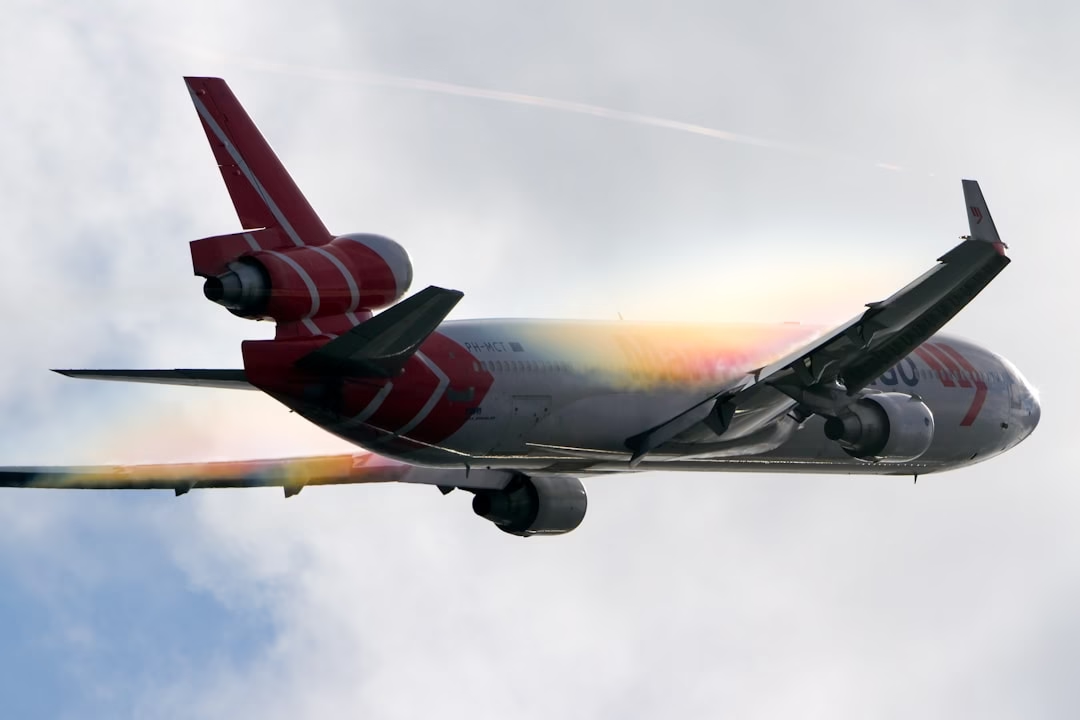
Finally, setup at the airport involves early communication. Inform check-in agents and boarding gate staff about your device. You may need to show its approval markings. On board, crew will instruct you on when to use it. Usually, use is permitted during cruise flight but not during takeoff and landing. Following these steps ensures a hassle-free experience.
Flying with Liquid Oxygen Advantages
Examining the perceived advantages of flying with liquid oxygen clarifies the ban. Liquid oxygen is very compact. It holds a large volume of gas in a small container. This is advantageous for ground-based, high-flow therapy. However, this advantage is negated by the immense risk in the air. Safety always trumps convenience in aviation.
Another advantage is its purity. LOX provides 99.5% pure oxygen. Yet, modern portable concentrators can provide 90-96% purity, which is medically sufficient. The marginal gain in purity does not justify the exponential increase in danger. Therefore, the aviation industry has universally rejected its use.
The real advantage lies in choosing the right alternative. For example, a well-fitted ResMed AirFit F30i mask with a travel CPAP improves comfort. The advantage is safe, compliant, and effective respiratory support. This allows patients to travel with confidence and dignity. Choosing approved technology is the only sensible path forward.
Common Questions Answered
Patients often have common questions about oxygen travel. Can I bring my own oxygen cylinder? No, personal compressed gas cylinders are also prohibited in the cabin. What about using oxygen in the airport? You must arrange this with the airport assistance service in advance. Will the airline provide oxygen? Some airlines offer medical oxygen services, but you must book it. However, they do not provide liquid oxygen.
Another frequent question concerns power outlets on planes. Most modern aircraft have power at seats for medical devices. However, you must confirm this with the airline when booking. Always carry enough battery power as a backup. What if my flight is delayed? Your battery supply should cover the original flight time plus a significant buffer. Planning for contingencies is a critical part of travel.
For all regulatory questions, refer to the Dubai Health Authority healthcare guidelines and your airline’s medical desk. They provide the most current and specific information. Being well-informed is your best tool for a successful trip.
Expert Recommendations
Experts offer clear recommendations for flying with respiratory needs. First, consult your pulmonologist well before your trip. Obtain a detailed letter outlining your condition and equipment needs. Second, choose an FAA/GCAA-approved portable oxygen concentrator. Work with a reputable supplier like Oxydubai to select the right model. We can help match device capabilities to your prescription.
Third, contact the airline’s medical department at least 72 hours before flying. Submit all required forms and get written confirmation. Fourth, pack smartly. Bring extra batteries, your prescription, and device manuals. Consider a portable battery charger compatible with your device. Finally, arrive early at the airport to manage security smoothly.
Adherence to UAE Ministry of Health medical standards is paramount. Experts also recommend testing your setup on a short trip first. This builds confidence for longer journeys. Remember, the goal is safe and therapeutic travel. With proper planning, you can explore the world without fear.
Frequently Asked Questions
1. Why is flying with liquid oxygen completely prohibited?
It is prohibited due to extreme fire risk, pressure sensitivity, and potential for cryogenic burns in a confined cabin.
2. What is the best alternative for flying with liquid oxygen needs?
The best alternative is an airline-approved portable oxygen concentrator (POC), like the Inogen One G5.
3. Do I need special documentation to fly with a POC?
Yes. You need a doctor’s letter, the POC’s FAA/GCAA approval sheet, and often a completed airline medical form.
4. Can I use my POC during takeoff and landing?
Typically no. Airlines usually permit use only during cruise flight. Follow specific crew instructions.
5. Where can I rent or buy an approved travel oxygen device in the UAE?
You can find approved devices at specialized providers like Oxydubai. Browse our respiratory equipment and products online.
6. How do I ensure my flying with liquid oxygen alternative is compliant?
Check the manufacturer’s website for FAA/GCAA approval notices and always confirm with your airline before booking.
Conclusion
In conclusion, the prohibition on flying with liquid oxygen is absolute and for excellent reason. Aviation safety regulations prioritize the well-being of all passengers and crew. The risks associated with LOX are simply too great in the unique aircraft environment. Fortunately, the medical technology landscape has evolved dramatically. Today, patients have access to sophisticated, safe, and approved portable oxygen concentrators.
Successful travel hinges on preparation and knowledge. By understanding the rules, selecting the right equipment, and coordinating with your airline, you can travel freely. In the UAE, resources and expert guidance are readily available. At Oxydubai, we are committed to supporting your respiratory health journey, on the ground and in the air. We provide not only equipment but also the crucial advice needed for compliance.
If you are planning a trip, start the process early. Consult your doctor, research approved devices, and contact our respiratory specialists. We can help you navigate the requirements for a smooth journey. Remember, safe travel with respiratory support is entirely achievable. It just requires choosing the right path and the right partners.