

Flying with CPAP Emirates Etihad Guide 2025 – Complete Guide
Looking for sleep apnea solutions? Navigating air travel with a CPAP machine requires careful planning. This is especially true for passengers flying with leading UAE carriers. A well-managed travel plan ensures uninterrupted sleep therapy and compliance with airline safety regulations. Consequently, understanding the specific policies of Emirates and Etihad Airways is crucial for 2025 travel.
In the UAE, millions manage sleep apnea with continuous positive airway pressure therapy. Traveling with your device doesn’t have to be stressful. With the right preparation, you can ensure your health needs are met seamlessly at 35,000 feet. Moreover, UAE regulations support passengers traveling with essential medical equipment.
At Oxydubai, trusted by 10,000+ UAE patients, we provide premium respiratory equipment and products. Our expertise helps travelers prepare correctly. This guide consolidates the latest 2025 policies for a confident journey.
Need Respiratory Solutions?
Understanding Flying with CPAP Emirates Etihad Guide
Both Emirates and Etihad classify CPAP machines as medical devices. Therefore, they are exempt from standard cabin baggage allowances. You must carry your device as a personal item. However, advance notification is strongly recommended, particularly for long-haul flights where you may need to use it onboard.
Firstly, check the airline’s website for their specific “Medical Equipment” or “Special Assistance” forms. You typically need to submit these at least 48 hours before departure. Secondly, carry a doctor’s letter. This letter should state the medical necessity of the device. It must include your name and the equipment details.
Furthermore, the Dubai Health Authority healthcare guidelines emphasize carrying medical documentation. For instance, your prescription or a statement of diagnosis is vital. This preparation aligns with international travel standards and smooths security checks.
Finally, ensure your machine is labeled with your name. Also, pack all essential components like the power cord and mask in a carry-on bag. Never check your CPAP machine with luggage. Loss or damage could severely disrupt your therapy.
Benefits of Traveling with Sleep Therapy Devices
Using your CPAP during flight offers significant health advantages. Primarily, it maintains therapy consistency, preventing the return of apnea symptoms like fatigue and headaches. Airplane cabins have reduced air pressure and lower oxygen levels. As a result, using your CPAP can help stabilize breathing patterns in this environment.
Additionally, consistent use promotes better rest during long journeys. You will arrive at your destination feeling more alert and refreshed. This is crucial for business travelers or those facing busy itineraries. Moreover, it prevents the potential health risks associated with untreated sleep apnea at altitude.
Modern devices like the ResMed AirMini compact CPAP are designed for travel. They are lightweight, quiet, and often have battery options. Consequently, they make in-flight use discreet and convenient. Investing in a travel-specific model can greatly enhance your comfort.
Flying with CPAP Emirates Etihad Features
Key features of a successful travel plan include power compatibility and battery rules. Emirates and Etihad provide power outlets at most premium seats. However, economy class access may be limited. You must verify your specific aircraft and seat power availability before flying.
For battery-powered operation, strict rules apply. Generally, lithium-ion batteries must be under 160 watt-hours (Wh). They must be carried in the cabin. Furthermore, terminals must be protected from short circuits. Spare batteries have additional limits, usually a maximum of two. Always check the latest UAE government healthcare regulations on battery transport.
Another critical feature is the device’s FAA/EC approval. Most major brands like ResMed and Philips are approved. Carry proof of this approval if possible. Also, consider a compact machine. A smaller device is easier to manage in the confined space of an airline seat.
Finally, a suitable mask is essential. A nasal pillow mask like the ResMed AirFit F30i mask can be less obtrusive. It may also feel more comfortable when reclining in an airplane seat compared to a full-face model.
Medical Device Travel Specifications
Technical specifications for travel focus on size, weight, and power. Ideally, your travel CPAP should weigh under 2kg. It should also be small enough to fit under the seat in front of you. The device must operate on dual voltage (100-240V) to handle global power outlets without a converter.
Battery specifications are paramount. Ensure any external battery is clearly labeled with its Watt-hour rating. For example, many travel batteries are around 98Wh, which is typically acceptable. You can find compliant power solutions for devices like the ResMed AirSense 11 CPAP machine.
Humidifier use in-flight is often discouraged due to spill risks. However, many modern machines use integrated, non-spill humidification systems. Check if your device is suitable. Alternatively, use a heated tube to reduce condensation. Always follow the World Health Organization respiratory health guidelines for device hygiene while traveling.
Expert Medical Advice?
Setup and In-Flight Maintenance
Setting up your device onboard requires a few simple steps. First, inform the cabin crew you will be using a medical device. They can assist with power access and may offer a seat with more space if available. Next, place the machine securely on your lap or on the floor under the seat.
Connect the hose to the machine and your mask. Then, plug the device into the power outlet if using mains power. If using a battery, ensure it is adequately charged before boarding. Turn on the machine and perform a normal seal check. The ambient noise of the cabin often masks the sound of the CPAP motor.
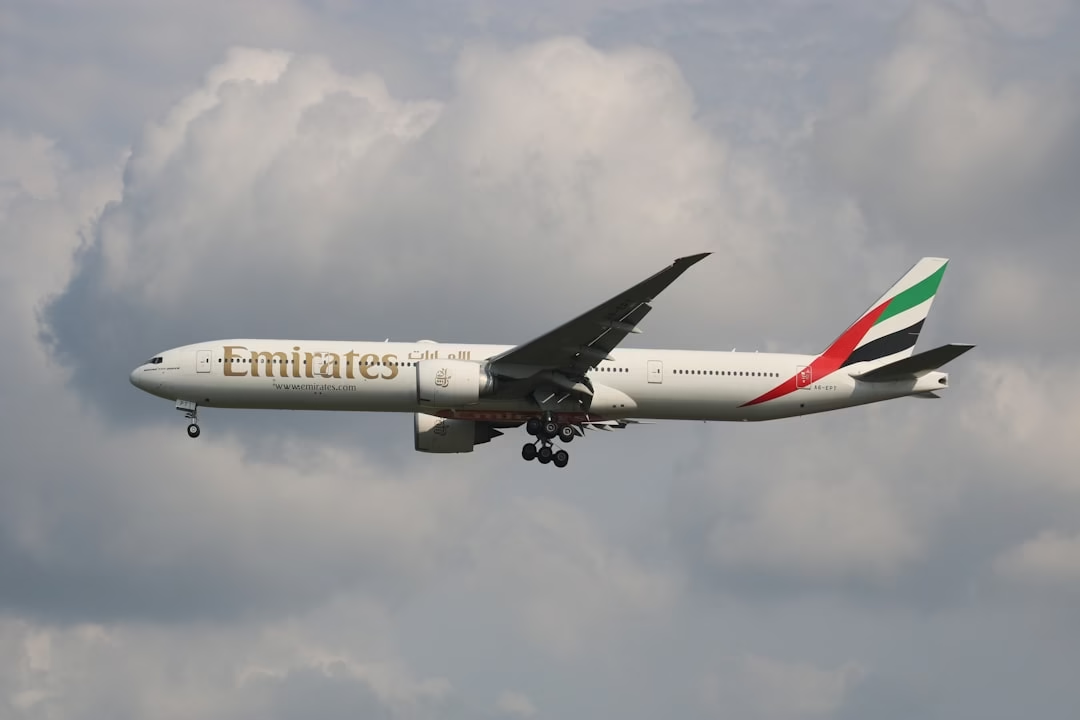
For maintenance during the flight, keep water for the humidifier in a sealed, clear bottle for security screening. Wipe down the mask with a sanitizing wipe before and after use. Keep all components in your bag when not in use to avoid loss. Following these steps ensures a hassle-free experience aligned with UAE Ministry of Health medical standards.
Flying with CPAP Emirates Etihad Advantages
The primary advantage is regulatory clarity from both airlines. Emirates and Etihad have well-defined, published policies for medical devices. This transparency allows for thorough preparation. Additionally, their staff receive training to assist passengers with medical equipment, providing an extra layer of support.
Another significant advantage is the extensive route network. Flying from Dubai or Abu Dhabi, you can reach most global destinations. Therefore, having a consistent policy across flights simplifies multi-leg journeys. You can also often pre-arrange power access, ensuring your device will work throughout the flight.
Furthermore, the UAE’s advanced healthcare framework supports travelers. Resources from authorities like the Health Authority Abu Dhabi regulations provide a strong foundation for patient rights. Carrying a device from a trusted supplier like Oxydubai, which offers the ResMed Astral 150 ventilator for more complex needs, ensures quality and reliability.
Common Questions and Concerns
Will security confiscate my CPAP? No, but you must declare it at screening. You will likely need to remove it from its bag for X-ray screening. The hose and mask can usually stay in the bag. Inform the security officer that it is a medical device.
Can I use it during take-off and landing? Policies vary. Typically, you can use it once the seatbelt sign is turned off after take-off. You must turn it off and stow it before landing when the sign is illuminated. Always follow crew instructions.
What if there’s no power at my seat? This is why a certified battery is essential. If mains power fails or is unavailable, a battery backup will allow you to continue therapy. For oxygen therapy patients traveling with a concentrator like the Inogen One G5 portable oxygen concentrator, similar battery planning is critical.
Do I need a converter? UAE and most aircraft outlets use 220-240V. If your device is dual-voltage (most are), you only need a physical plug adapter for your destination, not a voltage converter.
Expert Recommendations for 2025 Travel
For 2025, experts recommend digital documentation. Keep a digital copy of your doctor’s letter and prescription on your phone. Additionally, bookmark the airline’s medical policy page on your device for quick reference at check-in.
Invest in a global travel adapter with multiple USB ports. This allows you to charge the CPAP battery and other devices from one source. Also, consider a portable power bank that can charge your CPAP battery in a pinch, provided it meets airline safety specs.
Schedule a pre-travel check-up. Discuss your travel plans with your sleep specialist. They can ensure your device settings are optimal for altitude and provide updated documentation. Finally, perform a trial run. Pack and unpack your travel CPAP kit at home to ensure nothing is forgotten.
For personalized advice, don’t hesitate to contact our respiratory specialists. We can help you select the ideal travel machine and ensure you have all necessary accessories and documentation for a smooth journey.
Frequently Asked Questions (FAQ)
Q1: How many times should I notify the airline about my CPAP?
Notify them at least twice: once during online booking/manage booking and again at the airport check-in counter.
Q2: Is distilled water required for the humidifier in-flight?
While ideal, it is not always available. You can use bottled water for a single night if necessary, but regular use with non-distilled water can cause mineral buildup.
Q3: Can I use my CPAP on a plane without a battery?
Only if your seat has a compatible power outlet. You must confirm this with the airline in advance, as not all economy seats have power.
Q4: Are there weight restrictions for the CPAP as carry-on?
No, medical devices are typically exempt from weight and piece limits for carry-on luggage, but they must be reasonable for stowage.
Q5: What is the keyphrase for the 2025 Flying with CPAP Emirates Etihad Guide?
The essential guide is the Flying with CPAP Emirates Etihad Guide for 2025 travel planning.
Q6: What if my flight is on a codeshare partner airline?
You must comply with the operating carrier’s policy, not the marketing carrier. Contact the airline operating the flight directly for their specific medical device rules.
Conclusion
In conclusion, successful air travel with a CPAP machine on Emirates and Etihad in 2025 hinges on preparation. By understanding airline policies, preparing documentation, and ensuring your equipment meets travel specifications, you can enjoy a comfortable and healthy journey. The process is straightforward when you follow the recommended steps.
Remember, your health is paramount. Therefore, never compromise on carrying your essential therapy device. The support structures in the UAE, from clear airline policies to robust healthcare regulations, are designed to facilitate your travel. Utilize resources like the Flying with CPAP Emirates Etihad Guide and expert suppliers to stay informed.
Ultimately, with the right planning, your sleep apnea therapy can remain consistent anywhere in the world. Safe travels and restful flights await with your well-prepared CPAP kit. For the latest products and advice, explore our comprehensive range of respiratory equipment and products designed for life on the go.

